By Jon Huang
Will Vogl grew up in Peyton, participating in 4‑H, planting trees with his father, and helping out at the family ranch near Truckton, Colorado. His parents raised Red Angus and sold them direct to consumers as a small-scale operation, but rising commodity costs and drought in the early 2000s forced the family business to close.
Vogl finished high school and became a firefighter.
Although his career took another direction, Vogl’s interest in forestry and animals never disappeared. In 2013, he and his wife settled on 7 acres in Black Forest and began raising chickens. Vogl learned about regenerative agriculture, the importance of soil health and the symbiotic relationships among soil microbes, plants, animals and the environment. At their peak, the Vogls raised 100 chickens, selling eggs and meat. When that market became less sustainable, he scaled back, but the itch for livestock remained.
Because they require less land, Vogl decided sheep would be a better option. On St. Patrick’s Day 2019, he purchased 14 adult sheep and began searching for pastures where they could graze. In addition to leasing land, neighbors were looking for more natural landscaping methods, so he began bringing his sheep over to graze. This provided the flock with a diverse diet and presented another opportunity.
As a firefighter, Vogl was aware of the fire risk posed by overgrowth in many Ponderosa pine forests in the area — particularly in Black Forest and Monument — conditions he likens to a hoarder situation ripe for wildfire danger.
“Ponderosa forests should be 40 to 60 trees per acre, and we’re seeing 500 to 2,000 trees per acre in places around here,” he said.
Historically, Vogl said, Native Americans conducted prescribed burns that allowed new vegetation to grow and attracted animal herds like elk and bison. Those animals grazed, fertilized the soil, thinned overgrown areas and allowed trees to grow healthier, thicker, and with more fire-resistant bark. These fires burned at lower temperatures for shorter periods and spurred growth of resilient plant species. They also allowed shrubs such as chokecherries and wax currants to grow, attracting beneficial wildlife and providing additional food sources, all of which created a more balanced, thriving ecosystem.
In recent times, tree overgrowth and reduced animal presence have led to decreased plant diversity in the understory (the area between the ground and the upper tree canopy). A thicker upper canopy blocks sunlight, resulting in thinner, less pest- and fire-resistant trees; thicker pine-needle ground cover reduces ground moisture and stresses trees — all of which has increased wildfire destructiveness. This was further exacerbated by past forest service policies that suppressed wildfires.
Will Vogl
In more recent times, however, tree overgrowth and reduced animal presence have led to decreased plant diversity in the understory (the area between the ground and the upper tree canopy), Vogl said. A thicker upper canopy blocks sunlight, resulting in thinner, less pest- and fire-resistant trees; thicker pine-needle ground cover reduces ground moisture and stresses trees — all of which has increased wildfire destructiveness. This was further exacerbated by past forest service policies that suppressed wildfires.
Vogl found that sheep can mimic some traditional herding practices by breaking down pine needles, eating leaves and smaller plants, fertilizing with their manure and exposing underlying seed beds to promote healthier forest regeneration.
In more open prairie areas, grass overgrowth under dry conditions poses an additional wildfire risk, particularly near expanding housing development. Sheep grazing has helped property owners manage grass growth and has made it easier to identify undesirable plants they might later remove manually or with herbicide use. Vogl said from personal experience on his own property that fertilizing the soil with composted manure has dramatically reduced unwanted weeds such as Canadian thistle, improved soil moisture retention and enhanced growth of more desirable plant species. Another advantage of prescribed grazing is that sheep can navigate uneven terrain that might be harder to access with motorized vehicles.
Having grown up around animals, Vogl also noticed the social benefits of prescribed grazing.
“There’s a connection to animals that I think a lot of people don’t realize they’ve been missing until the animals show up, and then they’re just really happy,” he said. “When we bring these animals onto people’s properties, they are so happy that they’re there. They’ll go out and just sit and watch them at night. They just really enjoy the presence of them. You don’t get that if you’re doing everything mechanically with mowers.”
To manage sheep in smaller areas, Vogl uses solar-powered portable electric fencing to enclose designated grazing areas. This allows him to move the sheep every few days and to enlarge the area depending on grass length and grazing duration. The setup mimics natural herding patterns to minimize overgrazing and give the land ample time to recover. In a rare wet season, a particular area might be grazed twice.
Vogl officially began the prescribed grazing business two years ago. In the last year, he estimates having grazed around 250 acres and 20–25 properties, including individual landowners and neighborhood homeowners’ associations. Pricing typically begins around $95 per acre, with an additional transportation cost for the sheep that can be split among neighbors. His current flock is about 100 sheep; depending on the season it can increase to around 150. Ewes (female sheep) typically live about a decade, while rams — particularly non-breeding males — are raised for about a year before being sent for butchering.
While Vogl sells lamb meat on a limited basis, the 37-year-old active firefighter and father of two is primarily focused on developing the grazing program. He also serves as vice president of the El Paso County Conservation District and enjoys giving community talks on, among other things, the history of Front Range forests.
“That’s been my sweet spot — using animals in a way that helps landscapes and restores things to a healthier point,” he said.
For inquiries about Vogl’s prescribed sheep-grazing business, contact him at 719-237-0431 or voglhomestead@gmail.com.
For more information on the history of Front Range forests, see Vogl’s talk: https://www.youtube.com/watch?v=c_hzXZRpVc4
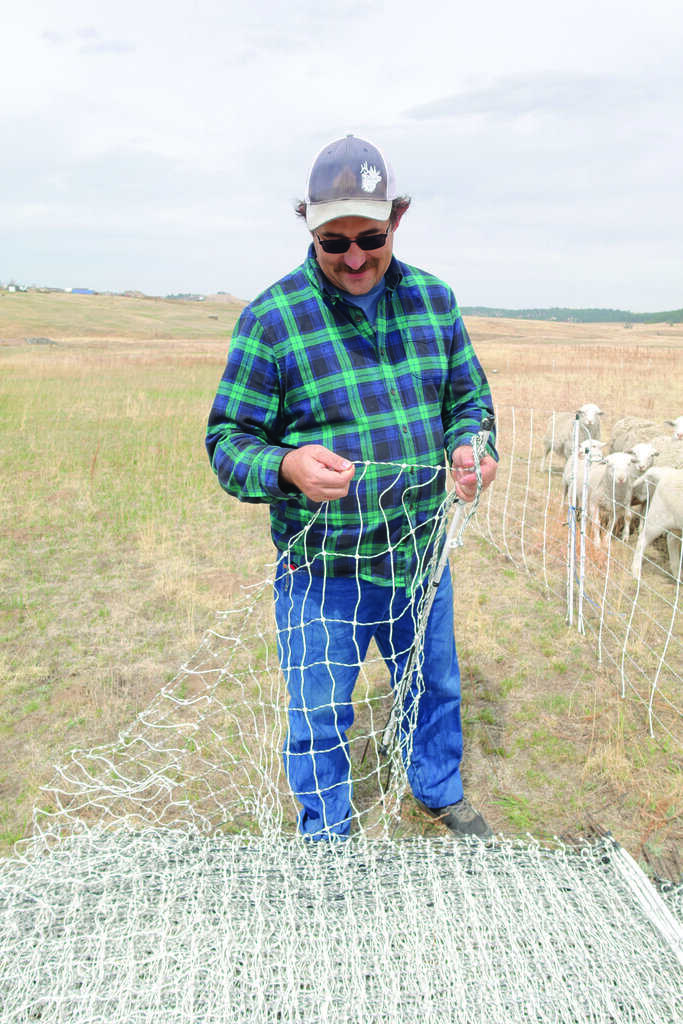
Will Vogl uses solar-powered portable electric fencing to enclose designated grazing areas.
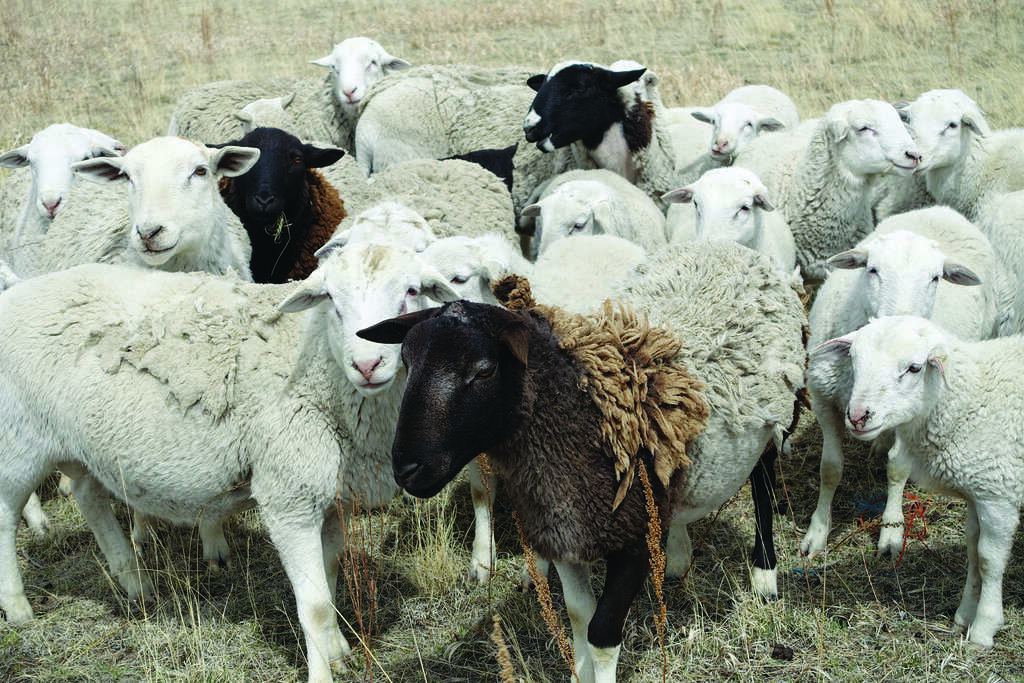
They don’t know it but these sheep act as fire mitigators when they graze on land, breaking down pine needles, eating leaves and smaller plants, fertilizing with their manure and exposing underlying seed beds to promote healthier forest regeneration.