Longtime local journalist Bill Radford and his wife, Margaret, live on 5 acres in the Falcon area with chickens, rabbits, dogs, cats, a flock of parakeets, goats, two horses and two ducks. Contact Bill at billradford3@gmail.com.
Maintaining your septic system
By Bill Radford
Sept. 14-18 is SepticSmart Week, described by the EPA (Environmental Protection Agency) as an annual event designed to bring attention to the importance of caring for and maintaining septic systems.
I’m doing my part with this column — and have enlisted the help of Shane Bates, who owns and operates Shane’s Septic Plumbing Service in Calhan. People who live in the city may never give much thought to where their wastewater goes. But move out to the country — like my wife and I did more than a decade ago — and it’s something to be aware of when caring for your very own water treatment system: your septic system.
“There are quite a few different types of systems,” Bates explained. “Mostly around here, we have a gravity-fed septic system, and that consists of a tank and a leach field.”

The underground tank has two chambers — “that’s why you have two lids,” Bates noted. The first chamber holds solids while gray water flows into the second one and then into the leach field, also called a drain field. The final component of the system, the leach field is a “subsurface wastewater infiltration system” that disperses and filters the wastewater into the surrounding soil.
The EPA lists four key elements in caring for your septic system:
1. Inspect and pump frequently.
2. Use water efficiently.
3. Properly dispose of waste.
4. Maintain your drain field.
A lot of people abuse their systems, Bates said. “The trick is just to get your tank pumped in time.”
The general rule is that septic tanks should be pumped every three to five years. But the actual timing depends on various factors, most notably the number of people in the household — and thus how many times the toilet is being flushed, how often the laundry is being done and so on.
Newer septic tanks may also have a filter, Bates said. “If you have three or four people in the house, the filter can get clogged within a year,” he cautioned. Taking care of that issue can be a DIY project, he added. “Just open your second lid and pull out the filter and clean it and put it back in.”
Why maintain your septic system? Money, for one thing. Properly cared for, a concrete septic tank may last 50 years or more, according to the EPA.
Why maintain your septic system? Money, for one thing. Properly cared for, a concrete septic tank may last 50 years or more, according to the EPA.
“Regular septic system maintenance fees of $250 to $500 every three to five years is a bargain compared to the cost of repairing or replacing a malfunctioning system, which can cost between $5,000 and $15,000 for a conventional system,” the EPA notes. “An unusable septic system or one in disrepair will lower your property value, and potentially can pose a costly legal liability.”
Some signs that you may have waited too long to have your system inspected or pumped? Wastewater backing up or gurgling into household drains is one, the EPA states. Another is a strong odor around the septic tank or drain field. In our case, a pool of stinky water near the edge of the leach field recently warned us of the need to have our tank inspected and pumped.
Maintaining your system includes being careful about what you put in it — and thus being careful about what you put down your sink or flush down your toilet.
“The wipes are worst on the tanks,” Bates said. Sanitary wipes don’t break down and can clog the system; some sources warn against even using so-called flushable wipes. “I have pumped tanks that were like three-quarters full of wipes,” Bates said.
Also use septic-safe toilet paper, he advised.
How do you know if your TP is septic-friendly? “The packaging on toilet paper should state that it’s septic-safe. We use Angel Soft that you can get at any grocery store.”
Never pour cooking oil or grease down the drain, the EPA warns. “Grease, once it hits that cold water, it coagulates and makes a ball,” Bates said.
Also avoid chemical drain cleaners or other harsh chemicals. “Your septic system contains a collection of living organisms that digest and treat household waste,” the EPA notes. “Pouring toxins down your drain can kill these organisms and harm your septic system.”
A basic step in maintaining your septic system is knowing where your tank is and how far your leach field extends. Sometimes it’s not that obvious.
“Some septics out there, the old way was they just buried a tank and then you had to go find it,” Bates said. In our case, we had a diagram that showed roughly where our tank was, but I still had to do a lot of digging to uncover the two openings before it could be pumped out the first time. We left markers so I knew exactly where to dig the next time; after that, we got smart and installed risers, which provide direct access to the tank.
“A lot of these people, they just keep digging up their tanks,” Bates noted. You won’t find him doing any of the digging, though.
“Some of these, the ground is baked so hard, it’s like digging into concrete. It kind of ruined my back, so I don’t dig any more.”
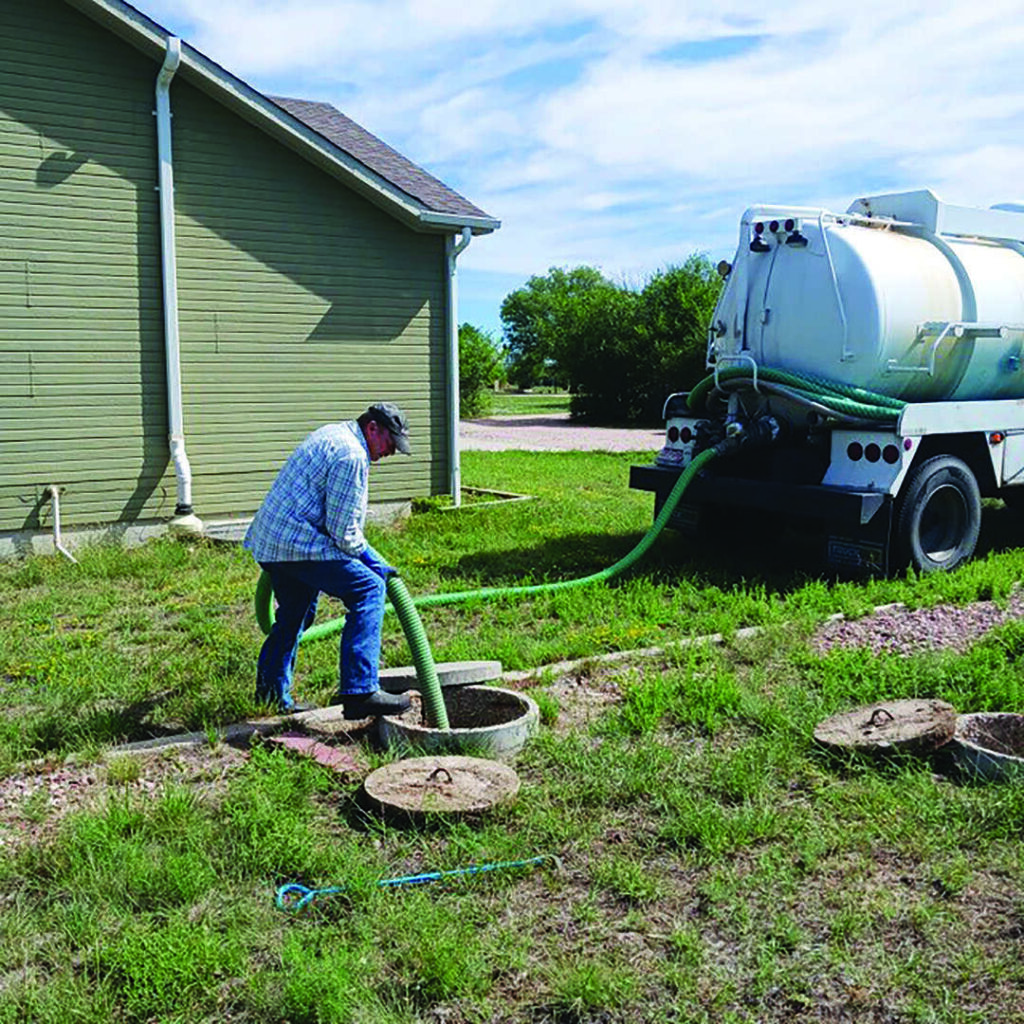
Shane Bates, of Shane’s Septic Pumping Service, said a basic step in maintaining your septic system is knowing where your tank is and how far your leach field extends.