Longtime local journalist Bill Radford and his wife, Margaret, live on 5 acres in the Falcon area with chickens, rabbits, dogs, cats, a flock of parakeets, goats, two horses and two ducks. Contact Bill at billradford3@gmail.com.
Update: summer activity at the ranch
By Bill Radford
So, how’s your summer going?
As we head further into the dog days of summer, here are some seasonal notes from Radford Ranch.
BUNNY BUDDIES: As I’ve mentioned before, we’ve long had bunnies — not for breeding or meat, just as pets. We’ve pretty much always had pairs, so when one bunny dies, we’re left with the question of whether we should get a new companion for the surviving bunny. Lilly the bunny had been alone for months after her constant companion died, but my wife, Margaret, then found a rabbit that needed a home.
As bunnies often tussle when they first meet, we made a pen inside the regular rabbit pen for the new rabbit, now named Patricia for no certain reason. This way the two could get to know each other without any physical contact. After a few days, I let them be together but quickly had to separate them when they became a whirling mass of frenzied, fighting fur. I tried again a couple of days later with the same result.
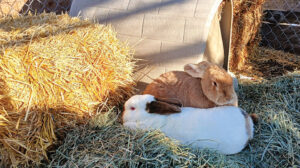
Eventually, though, Lilly began to hang out right next to the new bunny, but still separated by the temporary fencing that made up the new rabbit’s area. I began to leave a gap in that fencing so Patricia could either stay in familiar territory or venture out to see Lilly. It took still more days for that to happen — and a little more fur still flew — but the rabbits are now best buddies and are often seen nose-to-nose or hunkered down next to each other.
PUMPKIN POWER: The original idea was not to devote much time or space to gardening this summer, but that idea flew out the window. We have four adjacent garden beds in the side yard with kale, strawberries, some herbs; and, for the first time, grapes and raspberries.
Another small garden bed elsewhere has melons; on the opposite side of the property is one with corn. Then there’s the pumpkin patch out front. And a swath of land where the plan was to grow flowers for the bees.
The victories: Pumpkins are prospering, as they have in the past, and the corn is definitely coming up. Strawberries struggled at first but are now coming along, as are melons. The flower patch, though, is producing more weeds than flowers, despite having used a “pollinator mix” with allegedly thousands of seeds.
But there is good news in the flower realm. After a 10-year absence, the last two summers have seen an explosion of prairie coreopsis in all the neighboring yards and fields, providing plentiful food for the bees, which translated into plentiful honey for them and us. We figured the hot, dry winter and spring would mean no prairie coreopsis this summer, but we were wrong. They’re not quite as abundant as the last two years — our pasture is devoid of them after providing a sea of yellow the last two summers — but there are still fields with a good share of them.
And speaking of bees …
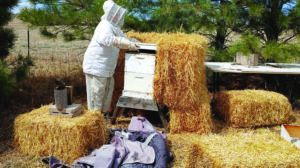
BEE BONANZA: Sadly, Margaret’s bees typically don’t survive the winter, but this year both hives not just survived, but prospered. One hive prospered so much, in fact, that we worried the bees would swarm; when a hive gets too crowded, the queen may take off with half or more of the bee population going with her. To keep the bees from going too far, Margaret did a split — dividing the one hive into two. Which left us overall with three hives to monitor.
A problem emerged, though. We expected a queen to emerge from queen cups that were transferred during the split, but a later inspection found no queen in any of the hives and no telltale signs like eggs or brood (terms that, like queen cups, I don’t totally understand but still nod approvingly when Margaret mentions them). And the bees in at least one hive were making a distinctive sound known as a “queenless roar.” So Margaret ended up getting a queen for each hive from Rocky Mountain Bee Supply in Colorado Springs.
A hive can survive for a time without a queen, but its long-term viability is threatened. As The B Farm (thebfarm.com) explains: “The loss of a queen can create turmoil within the hive. The colony’s social structure suffers. Fewer pheromones mean worker bees may become disorganized and less productive. With no order in the hive, brood production decreases, and no new eggs are laid.”
MENACING MICE: Mice In chicken coops is a common problem, it seems. Pretty much anytime I walk into the main coop, I’ll see a mouse scurrying along —often squeezing behind the drywall. They’re also a common sight in the duck yard, digging holes. And then the other day I saw a mouse come out of the rabbit house to enjoy a strawberry on the ground.
That was the last straw. Mice can spread disease and parasites, so they are not a welcome sight. I long ago stopped feeding chickens in the coop so that mice wouldn’t be attracted, but they still seem comfortable there. While we try to have a live and let live attitude, we agreed we needed to take steps to curb the mouse population. So we have reluctantly set traps in the chicken yard and coop that the mice can reach but not the other animals. The mouse death toll has quickly climbed.
GRASSHOPPERS GONE? Two summers ago we saw that terrible grasshopper invasion, with clouds of them rising wherever I walked. Last summer, though, the grasshoppers seemed lower in numbers than even a typical summer. This summer, following the dry and warm winter and spring, we feared the worst. But it doesn’t look like the hoppers will be out in force. We had that blazing-hot March, so maybe they got baked. And then we had a very late freeze, so maybe they froze. Either way, we don’t miss them.
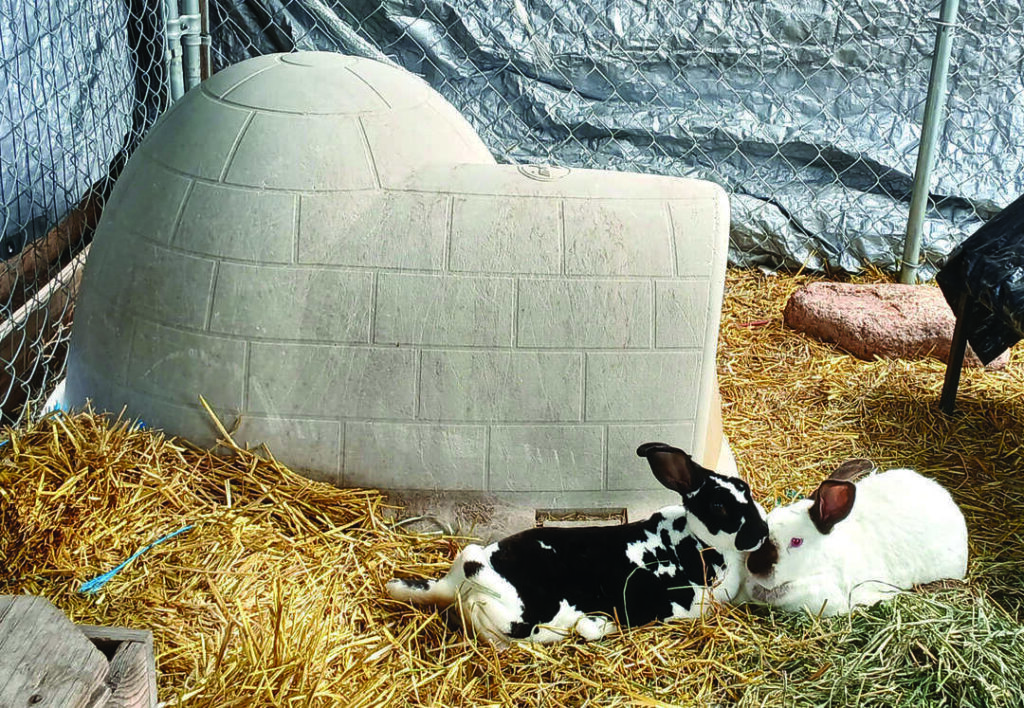
Patricia and Lilly have become best bunny buddies.
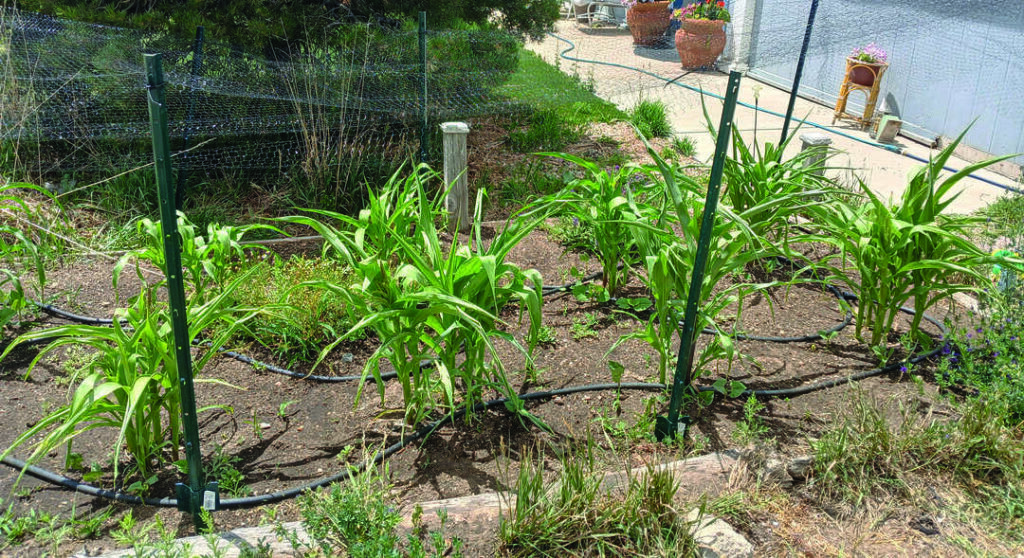
It might be small, but the cornfield is prospering.