Longtime local journalist Bill Radford and his wife, Margaret, live on 5 acres in the Falcon area with chickens, rabbits, dogs, cats, a flock of parakeets, goats, two horses and two ducks. Contact Bill at billradford3@gmail.com.
Spring has sprung to summer
By Bill Radford
Our warm winter, including a record-breaking heat spell in March, pushed up Mother Nature’s clock. While spring officially arrived March 20, there were plenty of signs of the season before that. And that March heat wave made early spring feel like the middle of summer.
Fly season, for example, arrived way early at our place. While not approaching what will undoubtedly be the peak of fly season in late summer, there have been enough flies that my wife, Margaret, has put our fly gun to use. (Fly gun? Yes, Bug-A-Salt: The Original Salt Gun. Load the plastic air gun with salt and start shooting. Margaret is kind to all animals — she finds snakes and spiders “cute” — but she does enjoy zapping flies.)
As April began, I asked people on Nextdoor what early signs of spring they had seen. Among the responses:
“Budding & blooming lilacs, tulips, daffodils. Many perennial flowers waking up & robins about.”
“I’ve seen so many wasps about, they are building nests everywhere. And flies already. Kinda crazy. Trees are budding, our prairie is turning green, early spring flowers blooming already.”
“My apple trees have flowers and bees are all over them. Our pollinators plants are showing green already.”
Several people on Nextdoor in the last couple of weeks of March also reported seeing hummingbirds, coming north after wintering in warmer areas like Mexico. The arrival of broad-tailed hummingbird scouts was first documented in El Paso County on eBird, an online platform where birdwatchers record and share bird sightings, said Allisa Zurbuchen, horticulture specialist for CSU Extension in El Paso County, on March 30.
“This is on the earlier side, but not alarmingly early,” Zurbuchen noted in an email. “Scouts are males that migrate first looking for food and breeding grounds.”
And then there are the bees. While honeybees don’t hibernate, they don’t venture out as much in the cold, so the warm winter drew them out earlier. Our two hives actually survived the winter, presumably thanks to the less-harsh conditions; sadly, that hasn’t always been the case. But early activity also raises the possibility that bees will exhaust their honey supply before nature provides pollen and nectar. Providing sugar water can help, though. And dandelions popped up early; they’re not the best food for bees, but they do provide some pollen and nectar.
We’re worried about the summer ahead. April showers bring May flowers, it is said. But April showers have essentially been nonexistent here on the prairie. The last two summers saw our fields blessed with yellow waves of prairie coreopsis, which our bees feasted on, leading to crazy amounts of honey to harvest. We’re not optimistic that those flowers will return for a third summer. Or any flowers for that matter.
Nature’s accelerated clock could have other ramifications. “It is possible that this year we will see phenological mismatches between flowering times and when the pollinators that are adapted to visit them are present,” Zurbuchen said in the email. “This can lead to lower seed production for these plant species due to insufficient pollination, as well as a decline in pollinator populations due to insufficient floral resources. Some pollinators are generalists, meaning that they get nectar and pollen from many types of plants. Other pollinators are specialists, so if the species of plants they depend on for food are blooming either earlier or later, then these pollinators are most impacted by this phenological mismatch.” (Phenology, the National Phenology Network explains, “is the study of the timing and cyclical patterns of events in the natural world, particularly those related to the annual life cycles of plants, animals, and other living things.”)
The warm winter could be good news for grasshoppers — and bad news for gardeners like us that got a reprieve from the hoppers last summer after the horrific grasshopper invasion the year before.
”Warm fall, winter and spring temperatures contribute to high grasshopper populations in late spring and summer,” Zurbuchen said. “Our observed temperatures over the past few months do set the stage for another year with high numbers of grasshoppers.”
What else to expect in summer 2026? Elevated wildfire risks if dry conditions persist; we just had a grassfire a couple of miles away that resulted in a mandatory — but thankfully short-lived — evacuation order for those closest to the fire. And we horse owners will be paying more for hay: The persistent dry and hot conditions, resulting in what the Colorado Climate Center described as “the worst year for Colorado snowpack in recorded history,” are expected to drive up hay costs.
Still hoping for those spring rains. And if not, at least a strong monsoon season.
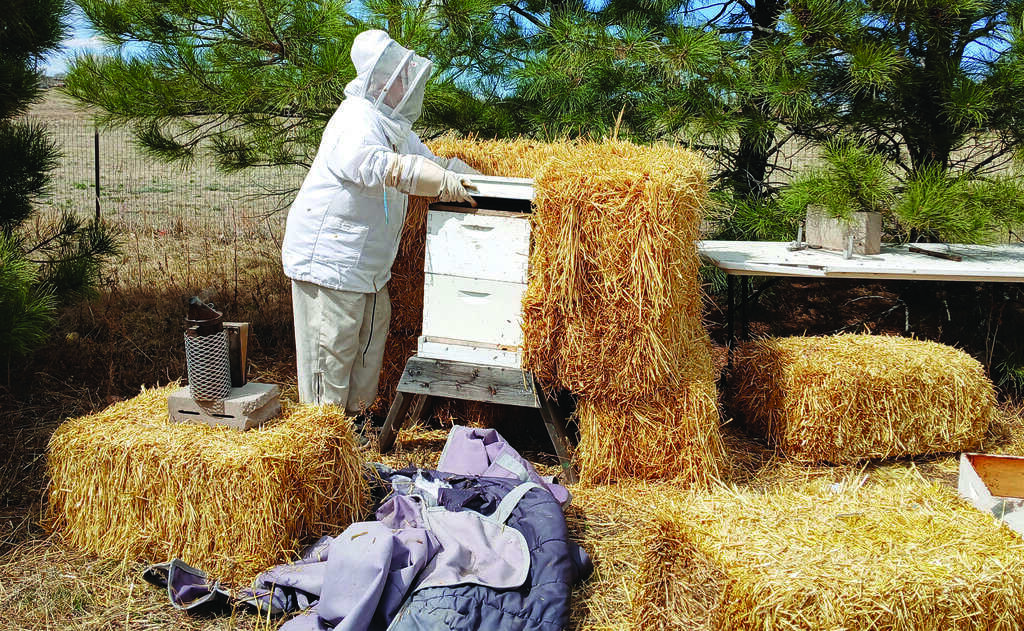
Margaret Radford conducts a late-March bee hive inspection.
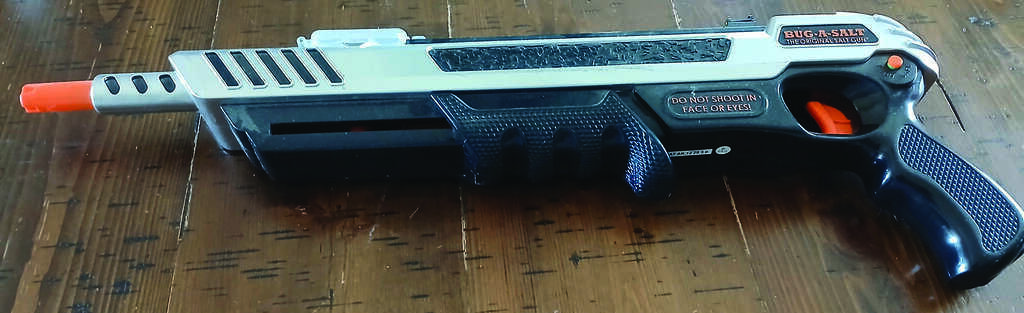
The Bug-A-Salt gun, ready for action against flies.