Longtime local journalist Bill Radford and his wife, Margaret, live on 5 acres in the Falcon area with chickens, rabbits, dogs, cats, a flock of parakeets, goats, two horses and two ducks. Contact Bill at billradford3@gmail.com.
Rehabbing the habitats
By Bill Radford
Some people count sheep in an effort to fall asleep.
I count the ways we could redo our animal pens.
Specifically, our chicken, duck and rabbit pens.
If you could see those pens, you would quickly figure out that we did not begin with some master plan. That’s because things have evolved along the way. We didn’t know our chicken flock would continue to grow. Or that our senior rooster would have to go into exile with a few hen friends because the younger roosters started beating him up. Or that a friend of Margaret’s would ask her to take in her two ducks.
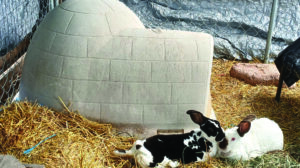
So what we have is a chicken house (and at 12 feet by 10 feet, it is a house, not a coop) with a pen extending on one side. That pen actually runs behind pens for the senior rooster, aka Grandpa, and the ducks. For shelter, the ducks have our first chicken coop, a structure that’s way bigger than they need. The rooster and friends are housed in another coop that we were going to disassemble and now are glad we did not. And finally, we have a pen for the rabbits. (Although at the moment, it is a pen for our rabbit, singular; I went out one recent morning to find our brown bunny dead in a corner of the pen. We’re thinking old age is the cause, but now we’re left with the question of whether we get the surviving rabbit a friend in a seemingly never-ending cycle.)
The pens are all made with chain-link panels Altogether, everything looks cobbled together, which it pretty much was. The roofing is a mishmash of metal panels and tarps, not the most aesthetically pleasing.
So, do we go incur the cost — both in terms of money and time — to construct something that works better and looks better? We have in mind what that would be if we did: a 30-foot-long (or more) and 6- or 7-foot-wide structure (wood and wire mesh) with interior walls that would create separate pens; those walls could be adjusted as animal populations grow or shrink. And then we would have consistent roofing all along the top.
We’re pondering what, if anything, to do. The current setup works and the ducks and chickens haven’t complained; it’s just that it looks ungainly.
Meanwhile, we did recently make some security upgrades. We have never lost a chicken to a predator, except for one independent-minded hen that routinely flew out of the chickens’ protected area to hang out in our barn; something got her one night during her travels as all we found the next day was a collection of feathers. But the chickens who stay put have done fine, with all the pens encircled by another layer of fencing. The other day, though, I found evidence that something had gotten past the first fencing and was digging a hole under the second, the chicken pen itself. I’m thinking it was a skunk; we know we have some living in our garage. So we now have pavers or fencing buried underground to deter digging.
The rabbit pen already has fencing buried underground all around, but that’s more to keep the rabbits from digging out. We learned about that danger the hard way when we lived in the Springs. We had chickens (though not near as many) and rabbits there, too. One morning I was in the bathroom and heard a shrieking; I looked out the window and saw a fox with one of our rabbits in its mouth; it had fled with the rabbit by the time I got outside. It turned out the rabbit had dug a secret escape tunnel out of its pen — and stumbled into the jaws of death. I will never forget the sound of a terrified rabbit screaming.
We’re also thinking of a layer of sand for the chicken pens. The floor of our chicken house is already covered with sand; the idea is that the chicken droppings are easy to rake out from the sand. As chickenjournal.com notes in discussing coop bedding, “When used properly, sand provides superior drainage and cleanliness compared to straw or wood shavings.” Construction sand is said to be best; avoid play sand, which tbnranch.com states “is very fine and powdery, retains moisture, compacts easily, and creates dust that can lead to respiratory issues and increase the risk of coccidiosis (a parasitic intestinal infection).” If we do extend the sand to the pens, we have to do a better job on the roofing; we don’t want the summer sun to stream through and make the sand unpleasant for the chickens to be on. (If you’ve ever walked barefoot on a hot, sandy beach, you know what I’m talking about.)
And, finally, we’re thinking of getting some swings for our chickens. Really, they’re a thing — you can even order them on Amazon. Chickens seem to love to swing, if you can believe all the videos you’ll find on Instagram.
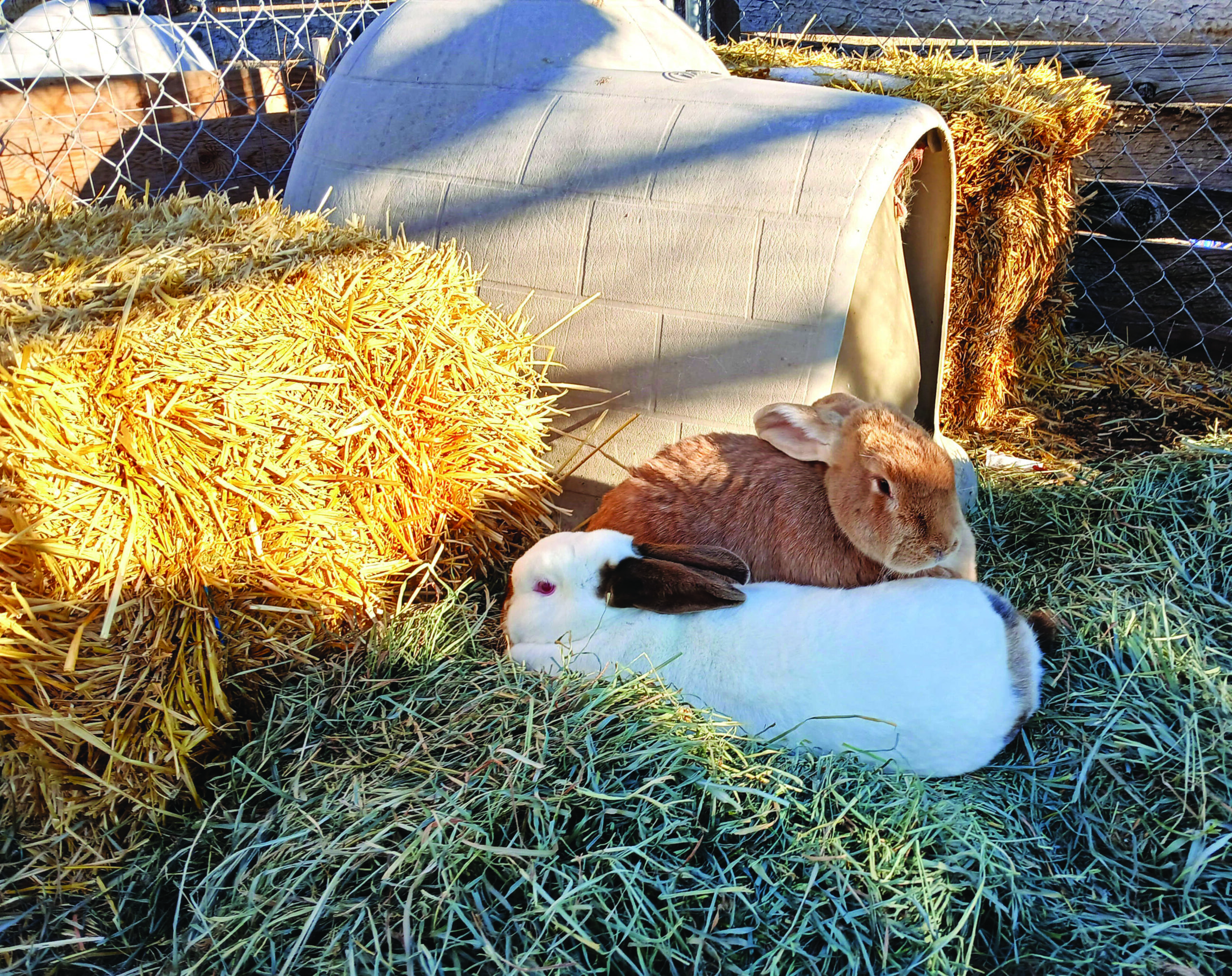
The two Radford bunnies are snuggled together in their pen. Unfortunately, the brown rabbit recently died.
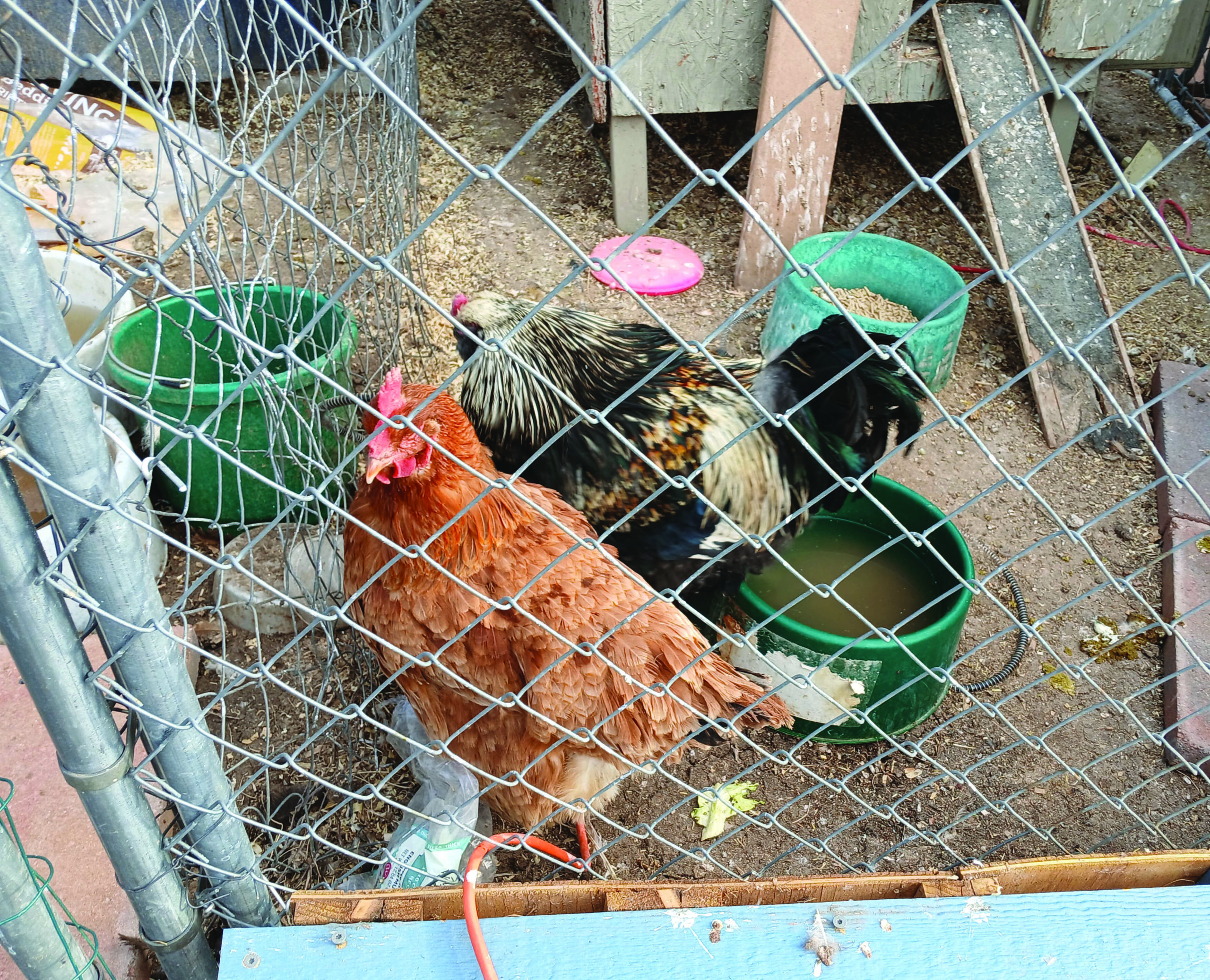
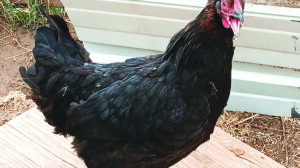
The senior rooster, Grandpa, (back) and friend are hanging out in their pen.