By Jon Huang
Over a decade ago, Grace and Willy Kelley were living in Wisconsin with an 8-month-old baby and a limited budget. They were looking for something inexpensive to do as a family. They came across the Waukesha Farmers Market; and, for the first time, met farmers growing without synthetic pesticides and herbicides.
Those farmers taught them that beet greens were edible and nutritious.
“My mind was blown by how delicious these veggies were,” Grace Kelley said.
From that experience, a door opened and her journey into local small-scale regenerative farming began.
Her father, Allan Morton, grew up commodity farming in North Carolina. Morton grew cash crops, including tobacco, sweet potatoes and soybeans. After meeting his wife, Joy, Morton moved to the Denver suburbs to raise their family and transitioned into the insurance industry.
The Kelleys eventually moved to Fort Collins, where they enrolled in a community supported agriculture program at On the Vine at Richmond Farms, a non-certified organic farm. From the farmers, Bob and Debi Miller, they learned about new foods like kohlrabi and spring garlic, and, to Kelley’s surprise, rediscovered familiar foods.
“I thought I hated cantaloupe,” she said. “I loved it. I just actually hadn’t had a really good cantaloupe before.”
Connecting with small local farmers transformed the couple’s relationship with food and sprouted an interest in how it was grown. From all the gleaned advice, they began growing their own food.
Kelley, an English major and writer, produced farm newsletters in exchange for food shares. Willy Kelley was a mechanical engineer for Lincoln Electric Automation, a global billion-dollar robotic welding company. Outside their regular duties, they found themselves spending more time in their garden. As their passion grew, over the next several years they began to consider a life around farming.
As the Kelleys vision for a different future took shape, the Mortons purchased a 32-acre parcel in Elizabeth, Colorado, in 2020 after selling the family farm in North Carolina. A year later, the Kelleys moved nearby and Further Up Farms was born.
In 2022, the first 1-acre plot was started; since then, the farm added an aquaponics farm and started cultivating another 4 acres. In 2023, Further Up Farms began selling at the Black Forest Farmers Market, expanded its community supported agriculture program and partnered with other Colorado farms.
Further Up also accepts SNAP and WIC and donates produce to their local food pantry. This year, the farm donated plant starters to various community organizations. They also offer a work-share program for people who want to work on the farm in exchange for a CSA share. Last year, they launched a pumpkin festival; this year, they are planning a farm-to-table dinner event.-
Kelley said they are not making a lot of money but feeding and taking care for humans is their purpose.
“We both have great cooks for moms, and we both grew up loving food, loving cooking and loving high-quality ingredients so we started creating that for ourselves and now we get to create that for other people,” she said.-
While the challenges surrounding the modern food system run deep, from growing practices and distribution networks to financial incentives, Kelley said her focus is on food justice centers and what she can do, which includes feeding others, improving the soil and sharing her knowledge.
“For me, the farm is my way of doing something. I can’t fix all these things, but I can grow healthy, delicious food,” she said. “I can invite people out here to get their hands in the dirt and connect with where their food comes from. I can teach skills so that people can grow food for themselves if they want to. I can educate about how to prepare food that maybe they’re not familiar with.”
Whether it is sharing knowledge about growing or cooking, supporting local markets or advocating for legislation, Kelley sees many opportunities for individuals to address food insecurity within their communities.
Further Up Farms borrows its name from the C.S. Lewis’s Chronicles of Narnia. For Kelley, the farm represents an invitation to a beautiful place and a new way of living. At age 34 and a mother of four children, she has built a new life with her family.
Now entering their fourth growing season, the challenges are plentiful, from unpredictable weather to ground squirrels eating seedlings to aphid infestations. While the farm has yet to break even financially, the lessons have been consistent and the growth steady.
Like any worthwhile pursuit, the farm is a group effort. Kelley and her father serve as the visionaries. Willy Kelley and Kelley’s mother manage logistics. Kelley’s brother and sister-in-law, Noah and Joy, introduced and maintain the aquaponics system and are a constant source of support.
This year, the farm began selling at a farmers market in Littleton. One of Kelley’s new customers was an elderly man using SNAP benefits who enlisted a librarian’s help to send her an email expressing how much he enjoyed her produce. One of her work-share members is a working mom who drives from southern Colorado with her children and finds the work therapeutic.
“It’s about the community and connecting with people and seeing them where they’re at and just loving them,” Kelley said. “Every single person who comes here is a beloved image bearer and deserves to be treated with dignity, respect and love for who they are and where they’re at.”
Further Up Farms can be found Saturdays at the Black Forest Farmers Market and online at https://furtherupfarms.com.
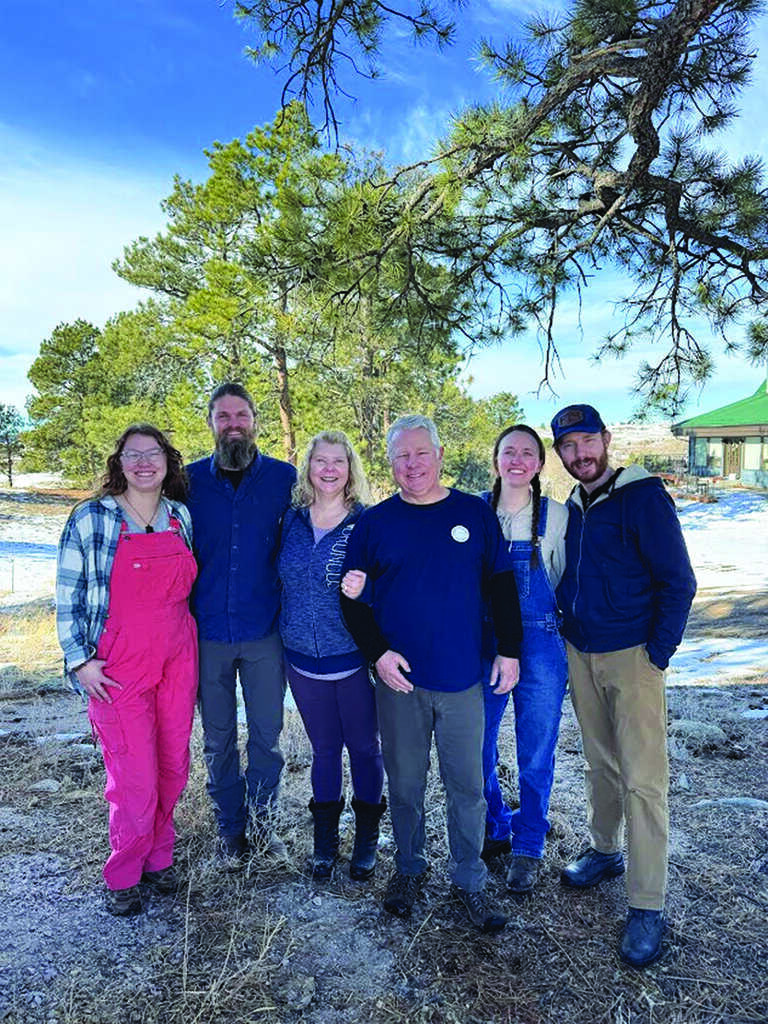
Farming at Further Up Farms is a family affair; from left to right: Grace and Willy Kelly, Joy and Allan Morton, Jocelyn and Noah Morton. Submitted photo