By Jon Huang
Ted Baker is an artist. He is a craftsman. Ted Baker cuts meat.
Baker didn’t want to be a butcher; he wanted to train horses. “But it was something that I always kind of fell back into,” he said.
His grandfather and father both ran food businesses in Colorado Springs. So Baker, who lives in Peyton, grew up learning to cut meat for his father’s meat market. He attended college at Western Colorado University on a football scholarship with the intent to study business, but left after two years because of injuries. He then trained horses and worked as a butcher to pay the bills.
The local G&C Packing processing plant hired him. He also went to work at Safeway as a cutting manager. Baker said the corporate environment was too restrictive; he always felt he could improve things but didn’t have a say. When local butcher Allen Sauder recruited him to process wild game in the 1980s, he saw an opportunity and started working with him in the evenings.
Back then, they worked out of a garage without refrigeration.
“People would drop off their meat, and then they’d come back that evening, pick it up and put it in their freezer when they got home,” said Baker.
A couple years later, he met Starla. They married and eventually had children.
When Sauder retired, Baker inherited his clients; and in 2000, Baker began Ted Baker’s Custom Cutting and Wild Game Processing.
The first few years were a blur. They couldn’t get a loan, so he bought equipment as funds allowed. They started with a tiny cut table, a fold-up wrapping table, a tape dispenser, wrapping paper and a small freezer. Things were financially tight, he said. So while building his business, Baker worked at Safeway and trained horses. If someone brought an animal in at 3 a.m., he would accept it.
Baker also trained horses on his property, and sometimes he was interrupted by potential customers.
“Sometimes people would show up and drop off (their animal),” Baker said. “I’d get off my horse, tie it up, check the animal, and get back on my horse, and then we would process at night. Starla could wrap while the kids were in bed. She’d run back and forth making sure they were OK.”
As the business grew, the three-car garage he used to process the animals transitioned into a proper processing plant. He also obtained a 1950s bone saw he still uses today and a new meat grinder to replace the 80-year-old one he inherited. He procured a smoker, added a walk-in freezer and refrigeration. Today, he has two proper cutting tables.
Baker specializes in wild game processing. He has done them all: elk, buffalo, antelope, deer, moose, bear, oryx, axis deer, mountain lion. Coloradoans will bring game they have hunted out of state and out of staters will bring game hunted in Colorado.
During hunting season, each day begins around 6:30 a.m. Animals are checked in on a first-come, first-serve basis and then processed, cut and put in the freezer for pickup. By 2 p.m., cutting is finished and it is on to making sausages and wrapping.
During hunting season, each day begins around 6:30 a.m. Animals are checked in on a first-come, first-serve basis and then processed, cut and put in the freezer for pickup. By 2 p.m., cutting is finished and it is on to making sausages and wrapping. From September through January, they work daily except for Thanksgiving, Christmas and New Year’s Day. They often have to turn people away at the end of the day.
“There aren’t enough meat cutters nowadays,” Starla Baker said. “It’s a lost art. People don’t know how to cut.”
Baker says it takes four years to become a journeyman cutter. Many grocery store cutters he has brought on over the years haven’t made the cut. His standards are high, as is his respect for the craft.
Starla Baker has been the consummate partner from raising children and wrapping meat to managing the administrative duties.
“We base our business on quality, not quantity … . That’s what’s kept us alive this long,” she said.
Cannon Baker, the youngest of the three Baker children, followed in his father’s footsteps after high school. Baker taught him from the ground up to know the ins and outs and be willing to do any task necessary. He started with wrapping, then production, meat grinding and eventually the cutting table. Now at 27, he is an integral part of the family business.
Ironically, Baker struggles with sharpening a knife, and his family lets him have it.
“You really can’t,” Cannon Baker said.
“He’s not very good at it,” said Starla Baker, with a smile. “It’s like the mechanic who doesn’t ever have time to work on his car.”
Each step of the process warrants a different cutting tool. There is the blunt-tipped skinning knife, the thinner boning knife, and the longer steak knife. It begins with knowing the anatomy — then the breakdown, the trimming, the cleaning — all leading to the final cuts.
To the experienced eye, the meat quality reflects how the animal’s was cared for. From muscle tone and skeletal structure to blood vessel condition, every carcass tells a story.
Baker compares each animal to mowing the yard: start with an unfinished animal and end with a beautiful collection of cuts.
“It truly is an art,” he said.
But it is hard work. It is dirty work. It is dangerous work. During peak hunting season, 14-hour days are common. There aren’t enough hours and help to keep up with demand. Baker isn’t surprised. Wages for meat cutters haven’t kept up with the cost of living. Electricians and plumbers tradesmen can make over double the hourly rate. When Baker first started, he charged $35 for an antelope. Today, it’s $150.
“They say tradesmen are going away and meat cutting is one of those tradesmen’s jobs,” Starla Baker said.
Meat cutting is a craft, it is essential, and to Baker it is rewarding.
During the offseason, they’ll process beef, pigs and lamb. In the last few years, beef volume has dropped as shrinking herds and skyrocketing auction prices have made it appealing for small farmers to sell live animals at auction. This hurts the smaller processors, but given the work, resources and thin margins that go into raising them, Baker said he understands.
“Beef should be that expensive, to be honest,” he said.
Consumer demand has never been higher. People want to know where their meat came from, its quality and how the animal was cared for.
As the family business has grown, it has allowed Baker to be more selective about the quality of the animals he accepts. Through his homemade jerky, sausage, summer sausage and snack-stick recipes, he has also had the freedom to express his creativity. Most importantly, at age 60, it has given him a way to embrace his calling while prioritizing the precious things in life.
“It’s allowed me to be a bigger part of my kids’ lives, which is pretty cool, because I worked a lot when they were little,” he said.
Starla Baker grew up in Dodge City, Kansas, surrounded by the smells of the large meatpacking plants where 10,000 head a day was the norm.
She never thought she’d marry a butcher.
Instead, she married a Baker who does 15 to 20 wild animals a day in season, 12 cows a week offseason, and each one, a unique work of art.
For additional information, visit https://tedbakermeats.com
Pull quote: During hunting season, each day begins around 6:30 a.m. Animals are checked in on a first-come, first-serve basis and then processed, cut and put in the freezer for pickup. By 2 p.m., cutting is finished and it is on to making sausages and wrapping.
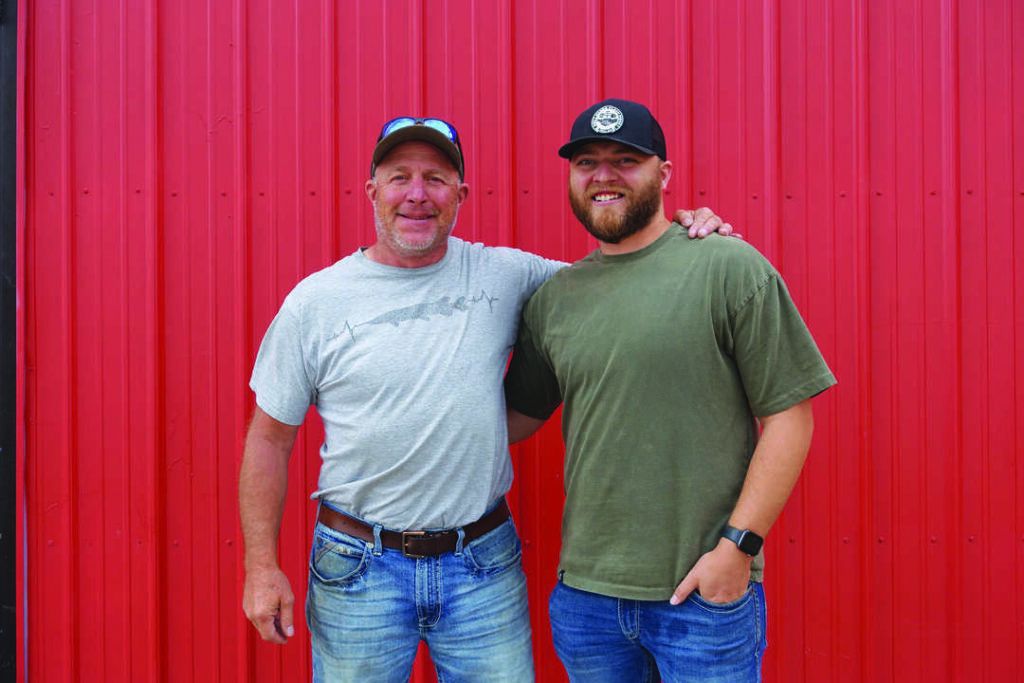
Ted Baker’s youngest son, Cannon, worked his way up by learning every aspect of the butchering business. He is now an inherent part of the company.
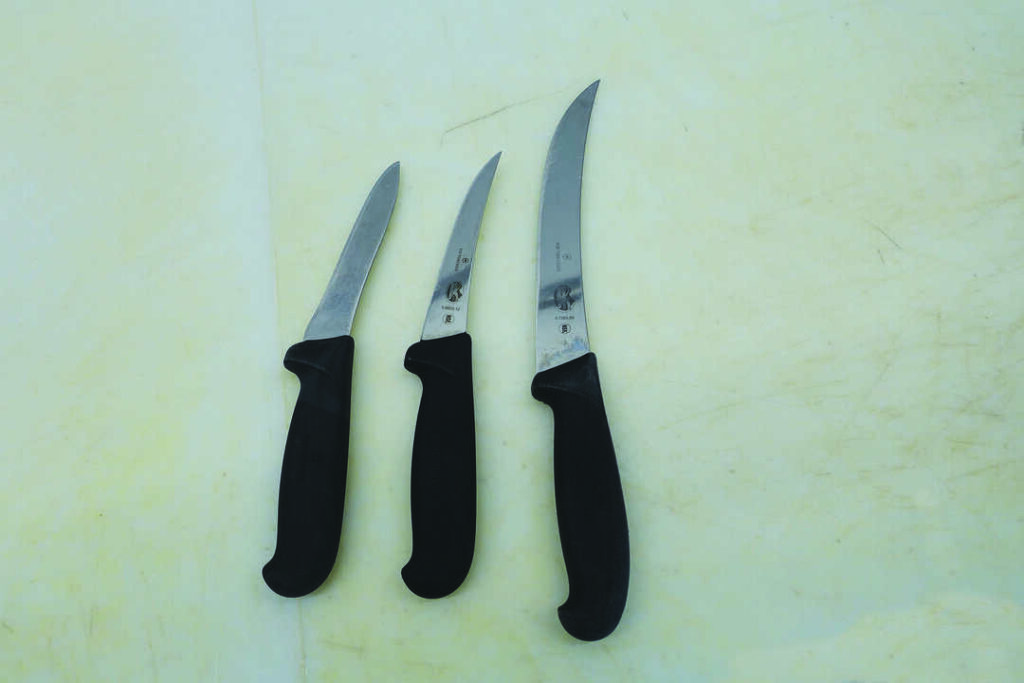
The tools of the trade include skinning, boning and steak knives.
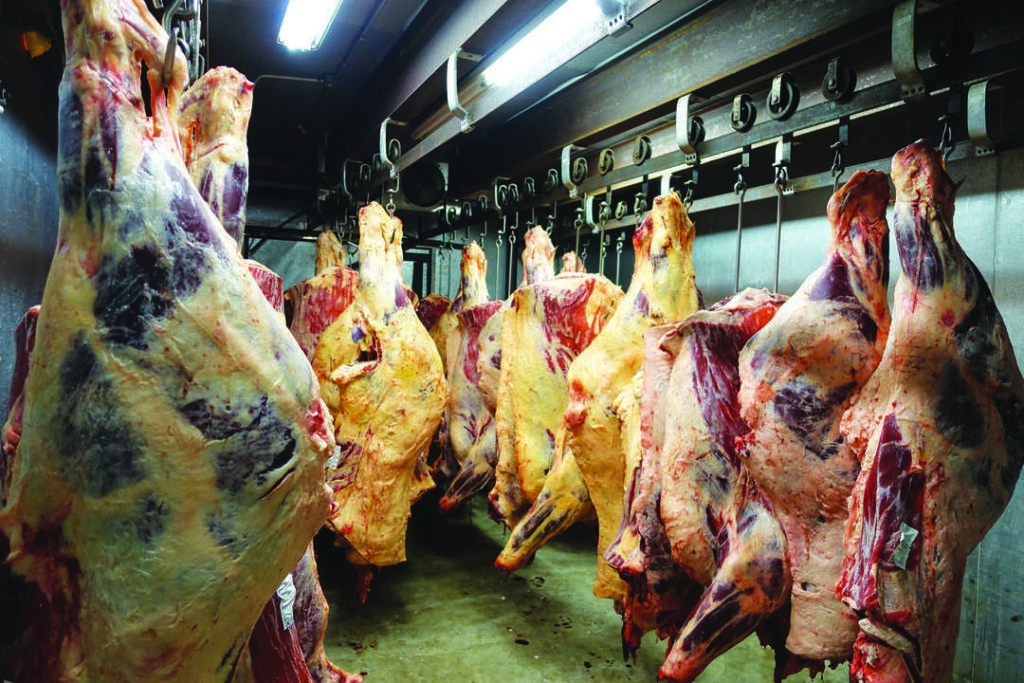
The beef is aged for a minimum of two weeks.
Ted Baker has made a success out of his business, which he started in 2000 with just a tiny cut table, a fold-up wrapping table, a tape dispenser, wrapping paper and a small freezer.