Coben Scott is a history graduate, a history buff, and he has explored and researched much of Falcon and the area’s past. Coben’s column, Yesteryear, features stories about the history of the plains.
The story of the Jackalope
By Coben Scott
Colorado’s history is deeply rooted in a blend of cultures, characters and stories. The stories that build our communities often have tall tales and folklore tucked away in every corner.
The San Luis Valley is famously full of UFO sightings; Bailey claims to be Colorado’s Sasquatch hub; and the high country has the rockslide that supposedly swept away entire mining camps. On the eastern plains and within our nook of the prairie is the elusive jackalope.
The origins of the jackalope can be traced to a few different backstories. The Huichol people of western Mexico have a legend that rabbits once had antlers. According to the legend, these rabbits would gift their antlers to deer for different reasons. This is an old myth in the culture related to the deer, an animal held above almost all others in Huichol mythology. The Huichol people share a language family, Uto-Aztecan, with Colorado’s Ute.
Roots can also be found far back in Central European history. Most abundant in the Bavarian region, the wolpertinger bears a striking resemblance to the New World’s equivalent, the jackalope. The most notable similarity is that both have the body of a rabbit and the antlers of a deer. Unlike the American jackalope, the wolpertinger includes wings and two sharp canines. Sometimes, the creature has other features of mammals, with antlers, fangs and wings, but most wolpertingers are the rabbit variant. Legend has it that on the night of a full moon, a woman can use a blessed bag to capture a wolpertinger. The trick to catching a jackalope has not been mastered.
In the age of pioneers and settlers, many early homesteaders were of German origin, likely bringing the comedic legends of a fierce hybrid bunny to the Old West. Cowboys driving cattle through the territories likely spun tales of similar creatures, but the term jackalope wasn’t coined until the 1930s. Two teenage brothers stuck antlers on a rabbit and sold it to Roy Ball, who displayed it in the La Bonte Hotel in Douglas, Wyoming. The mounted head became the town’s star attraction for a long time, so much so that the city issued jackalope hunting permits. The permits were only good for one day: June 31.
After word of the creature spread beyond Douglas, stories of the animal and its behaviors began to take hold on the Colorado prairie. Ranchers and settlers of these plains told tales of its odd actions. Supposedly, the jackalope is an excellent singer; some old ranchers claim that if a group is drinking and singing around a campfire at night, a distant jackalope may join in. The creature possesses the ability to repeat sounds like a parrot and can sometimes trick and spook people using that ability. Whiskey supposedly will act as a peace offering with jackalopes.
Because some people have reported that jackalopes can exhibit aggressive behavior, newcomers in prairie towns across Wyoming and Colorado in the mid-1900s were advised to wear leg protection to keep territorial jackalopes from attacking and gnawing at their shins and ankles.
The name jackalope is misleading. While most people have a clear vision of the iconic rabbit with antlers, the name implies that it is half jackrabbit and half antelope. Zero percent of the Douglas jackalope mount shares any characteristics with antelopes. The pronghorns that we call antelope here in the United States have two iconic black horns rather than the deer-like antlers that jackalopes sport.
The “jack” in jackalope is true to the jackrabbit, and eastern Falcon has a high jackrabbit population, most abundantly near Meadow Lake Airport. While rabbits mate in late summer and deer rut in late fall, it would make sense that jackalopes are promiscuous during the month of October, possibly increasing local sightings.
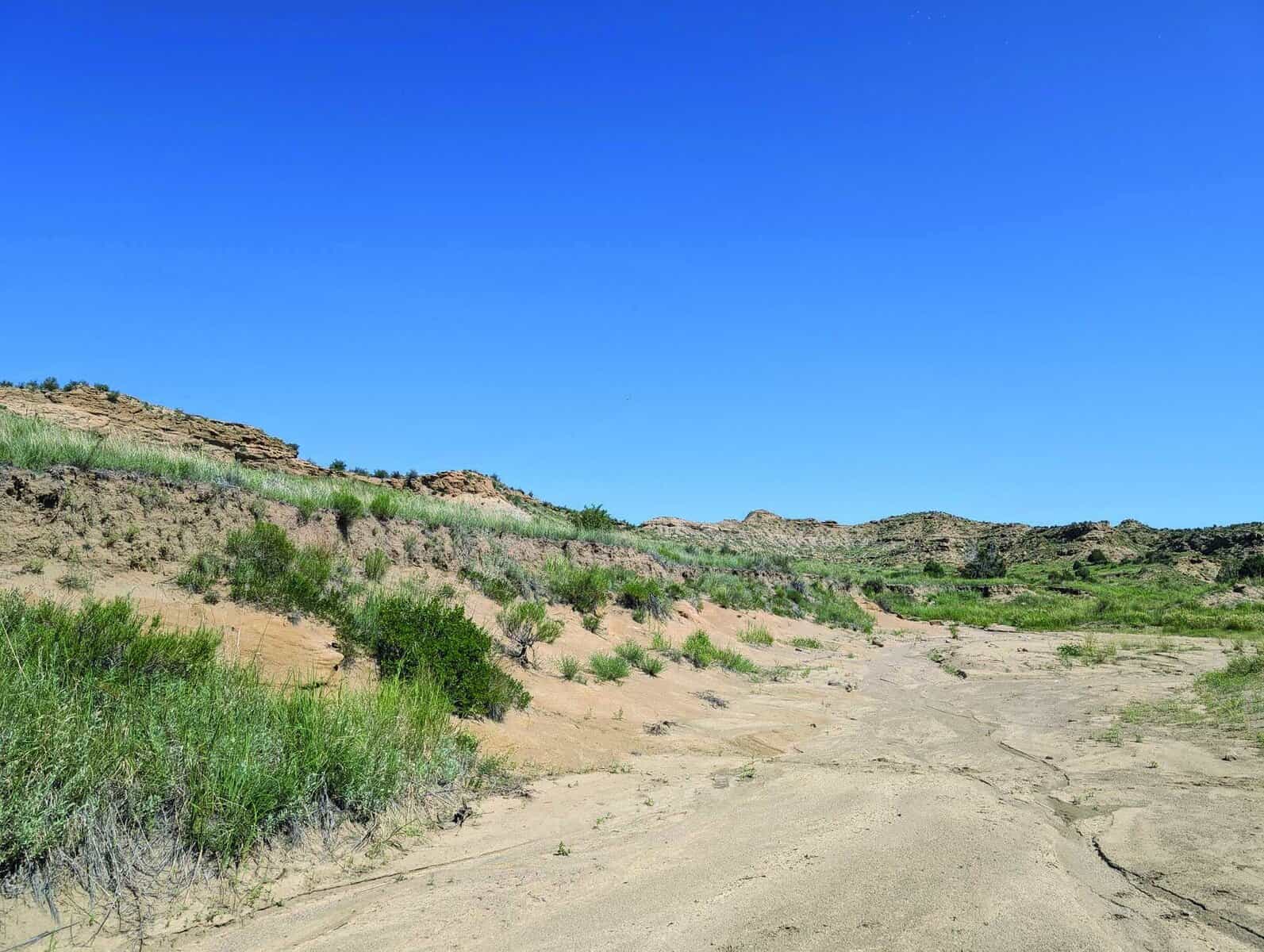
This Halloween season, while visiting a corn maze or local farmers market on the eastern side of Falcon or farther along the prairie, keep an eye out for this sparse icon of the American West. Great open spaces for jackalope watching can include Drake Lake, Homestead Ranch Park and the Paint Mines. Remember to bring whiskey and leg protection.
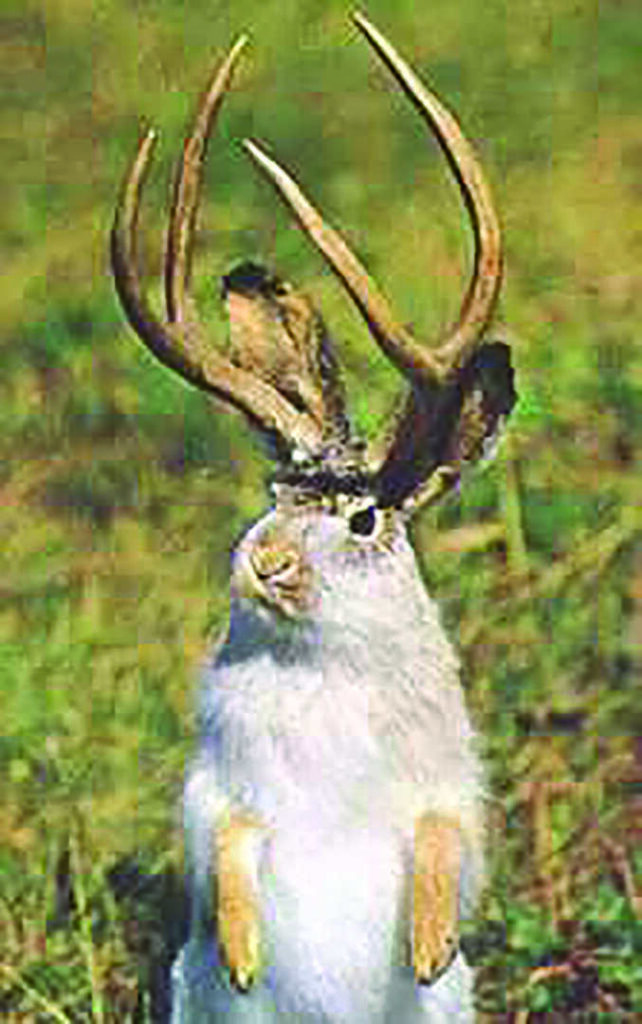
Eastern Falcon has a high jackalope, oops, jackrabbit population.
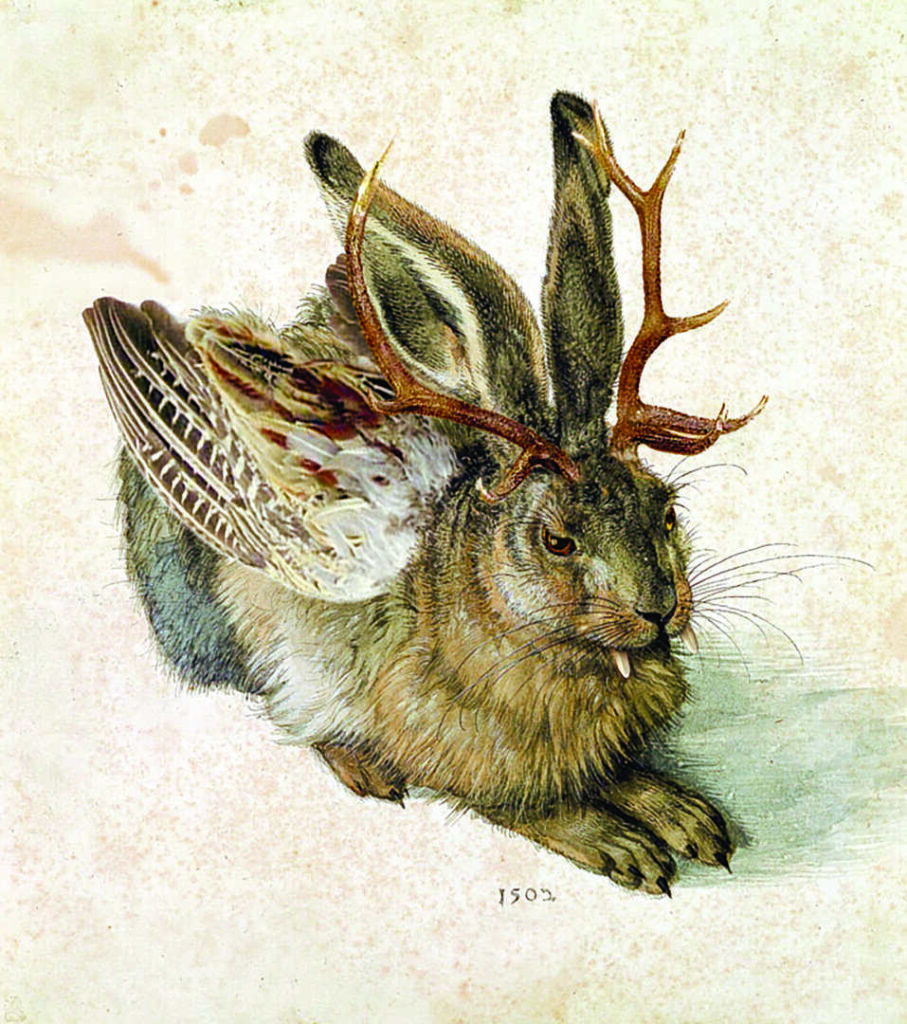
Another mythical creature, the wolpertinger, is similar to the jackalope, except the wolpertinger has wings and two sharp canines.