Longtime local journalist Bill Radford and his wife, Margaret, live on 5 acres in the Falcon area with chickens, rabbits, dogs, cats, a flock of parakeets, goats, two horses and two ducks. Contact Bill at billradford3@gmail.com.
Nana — over the rainbow
By Bill Radford
This is how the story of Nana the goat ends: Dr. Signe Balch, our goat vet, administers the first shot, a sedative. Nana walks around in her pen for a minute or two, then falls to the ground. Margaret, my wife, cradles Nana’s head in her arms as Dr. Balch administers the second shot, a drug to stop Nana’s heart. She dies quickly, painlessly, in Margaret’s arms.
This is how the story of Nana the goat begins: with a text nearly 14 years ago, from Hope, our then-teenage daughter. The message is short, direct: “Abandoned baby goat needs help!”
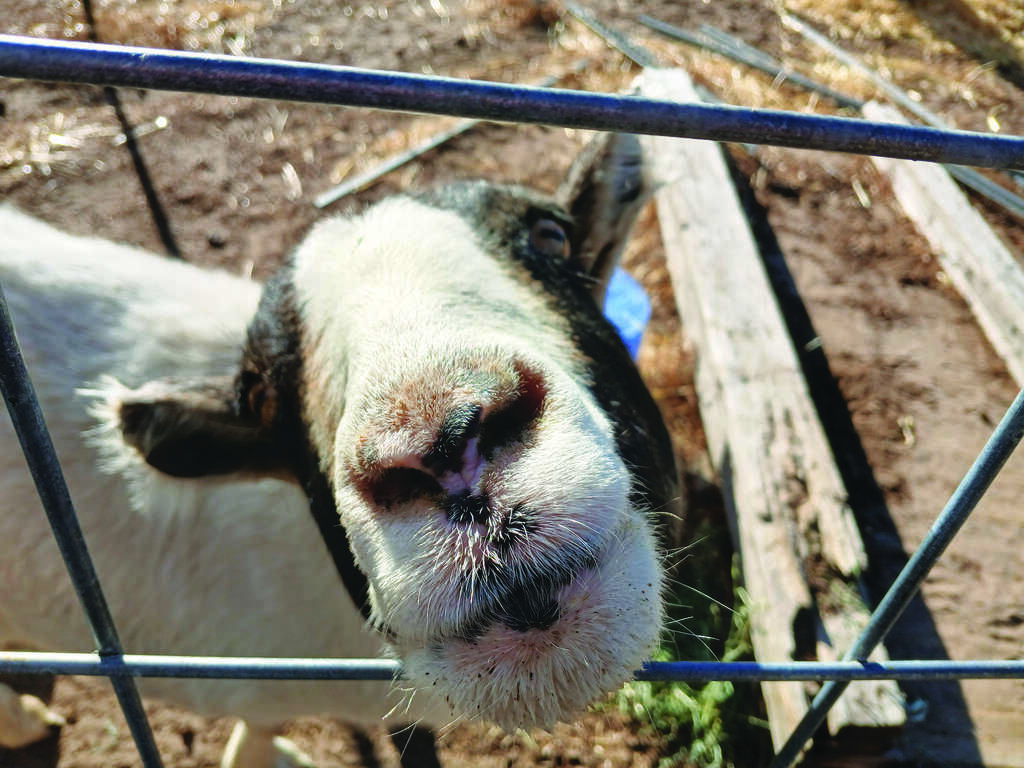
Margaret and I were returning from a trip. Hope had found the goat at the Powers Ranch on the east side of Colorado Springs, where we were boarding our horses. The baby goat obviously had been through some rough times, its ears apparently gnawed on by predators; that shredded ear look never went away. Hope took the baby home (we lived in the Springs then) and that’s where we found them both, Hope sitting on the floor doing her homework and the baby goat, maybe the size of a small dog, nestled next to her.
Nana — I don’t remember how we came up with that name — did not want to be alone, which we found out when we tried to leave her in the backyard that night. For a little goat, it had a very big cry; I ended up sleeping on a cot on the back deck to keep it company –— and quiet.
It was clear Nana could not be a city goat. So she became everyone’s goat at the Powers Ranch. We set up a pen for her there, where Nana would spend her nights, and during the day various people would let her out to roam the ranch and visit with everyone.
She spent the summer at the ranch, but when the fall came and we moved to our little house on the prairie, we brought her with us. We didn’t have a barn yet, just run-in shelters for the horses, so we set up Nana’s pen in the backyard, with an igloo-style doghouse to help keep her warm during the winter. I remember one night early on when she escaped from her pen, her ghostly white face pressed against our sliding glass door as she begged to come inside, ready to be a house goat.
That didn’t happen, but improvements did come. Eventually, we fenced in an area of the pasture and got a second goat, Christmas, to keep Nana company in her new goat quarters. And when Christmas died of a massive infection, we got another goat, Chica. When we had our barn built, Nana and Chica moved to a stall there. And when another rescue goat, Pepe, stumbled into our lives, we had the goat trio that has been with us for several years.
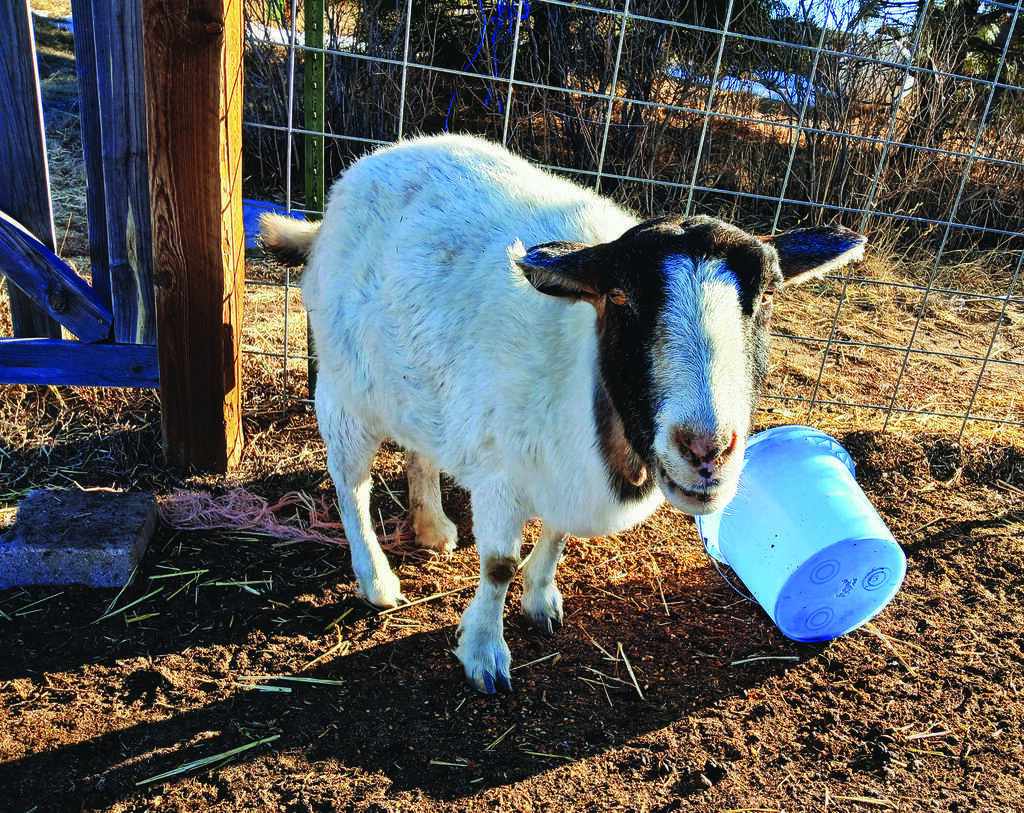
The most challenging times: the times twice a year where we had to corral and control the goats in order to trim their hooves; Nana, who had gone from Boston terrier size to 100 pounds or so, was more than a handful. Their most fun times: summer evenings when we would let them out of their pen to roam the entire property, feasting on grass and, annoyingly, on our conifers. Chica usually hung out close to us, asking to be petted; Nana had a more independent streak and would wander off — but never too far off.
A few months ago, I noticed that Nana seemed to be straining when trying to go to the bathroom, and her rear looked bad –— blackened and seemingly crusted over. Margaret tried washing it, thinking she could just scrub the crud off, but instead revealed a lot of ugly, bleeding tissue. She sent a photo to Dr. Balch.
The verdict: cancer, a diagnosis Dr. Balch confirmed with a visit. Nana was a Boer goat, a meat breed (as opposed to a dairy goat) with a white body. It seems lighter-colored goats, in particular, can develop a type of skin cancer called squamous cell carcinoma; one likely spot for the cancer to appear is the perineal and/or tail region, where a goat’s “lady parts,” as Margaret calls them, are exposed.
Squamous cell can be treated if caught early, but Dr. Balch said the severity and Nana’s age, now 14, meant there was little she could do.
There would be a time, we decided, that we would need to euthanize. But not yet, Dr. Balch assured. Nana was still eating, still sociable, still moving around.
We would know, she said, when it was time.
And so we put Nana in what we called hospice care. Nothing much actually changed, just more careful observation and more loving attention. At feeding time now, both morning and evening, Nana would get a treat, usually apple slices or banana, which she eagerly accepted.
It could be weeks, the vet said, or months before the end.
It turned out to be one month. Nana was still welcoming her treats, but she was moving slower and slower and spending most of her time in her stall alone, facing the wall. And the smell of death accompanied her.
So Dr. Balch came. It was a warm, sunny afternoon when she administered those two shots, when Nana breathed her last. We figured Chica and Pepe would say goodbye, that they would nuzzle or investigate the body, but they didn’t approach.
Had we acted too rashly? Should we have waited longer? No, it was time, Dr. Balch assured us, noting that Nana had not tried to get away or even hardly registered that the vet was there. And 14 years was a good lifespan for a goat, 14 years that began on the run, a baby terrified, pleading and it ended peacefully, with the sun beating down on her, with her in the arms of someone who loved her.
Not a bad way to cross that rainbow bridge.