Longtime local journalist Bill Radford and his wife, Margaret, live on 5 acres in the Falcon area with chickens, rabbits, dogs, cats, a flock of parakeets, goats, two horses and two ducks. Contact Bill at billradford3@gmail.com.
Two chicks and a plentiful harvest
By Bill Radford
OK, summer 2025 is officially over. But I still have some summer memories to share.
What hoppers?
Summer 2024 saw a massive invasion of plant-hungry grasshoppers, termed the “hopperpocalypse” by some. And I wrote this spring that the grasshoppers were expected to be in full force again this summer.
But in my neighborhood, there actually seemed to be fewer grasshoppers than last year and even the past several years. Certainly there were some, but I didn’t kick up the massive clouds of hoppers that I was used to when walking the property. And the rhubarb crop, usually decimated later in the summer after the initial harvest, actually still stands.
I asked people on Nextdoor if they had seen the same thing. “Very few in Falcon,” one person responded. Another, even more succinctly, posted, “What grasshoppers?”
So what happened? That was my question for Allisa Surbuchen, horticulture specialist for Colorado State University extension in El Paso County, whose “Managing Grasshoppers in the Home Garden” webinar I attended in early May. Her answer? Spring rains.
“In parts of El Paso County we had a wetter than average June,” she explained in an email. “This is when newly hatched nymphs need to voraciously feed to make it to adulthood. When it is raining and temps are cooler, they cannot feed. Because it was so consistently rainy, this likely led to localized areas where grasshopper populations died off. In southern El Paso County, there were still large numbers of grasshoppers. Fortunately we had decent monsoons in much of the Front Range, which kept populations a little more in check!”
Surprise chicks
My wife, Margaret, was headed for the front door when she heard the clucking.
It was one of our hens, sitting under one of our front yard pine trees. And the little shapes racing around it were two tiny chicks.
Apparently, the hen had left the chicken yard to set up a nest by itself and had been sitting on an unknown number of eggs for weeks. The result: the two baby chicks. There might have been more, but we never found them or even the nest. It was a miracle that the two chicks were alive: The discovery was made a couple of days before Labor Day (the unofficial end of summer) and at the end of a particularly cold and wet several days. But the mama hen had somehow kept at least these two babies alive.
We had a hen a summer or two ago that snuck away from the chicken yard and set up a nest in the barn, where we let her sit on and hatch eggs. But we had been watching her and thus were at least prepared for the babies. These two were a complete surprise.
We secured them in a pen in the garage where we had kept chicks and ailing, quarantined chickens before. Margaret’s reasoning was then: Well, if we have to monitor and help raise two chicks, might as well get more. So she got two chicks of a specific breed she wanted from a woman she found on Facebook and two more chicks from a friend. Which means an addition of six hens to the flock at some point. That’s how chicken math goes: You always end up with more chickens than planned for.
Garden harvest
Summer 2024 was a disappointing one for our Russian sage, a centerpiece of our backyard. This spring we cut the Russian sage back and did more weeding than ever before. The result: a bumper crop of Russian sage. It also bloomed earlier than ever before. In the past, we would spot Russian sage blooming in the Springs, then in Falcon and then, often not until late August, our own Russian sage would bloom. This time we, and our bees, have enjoyed the foliage since July.
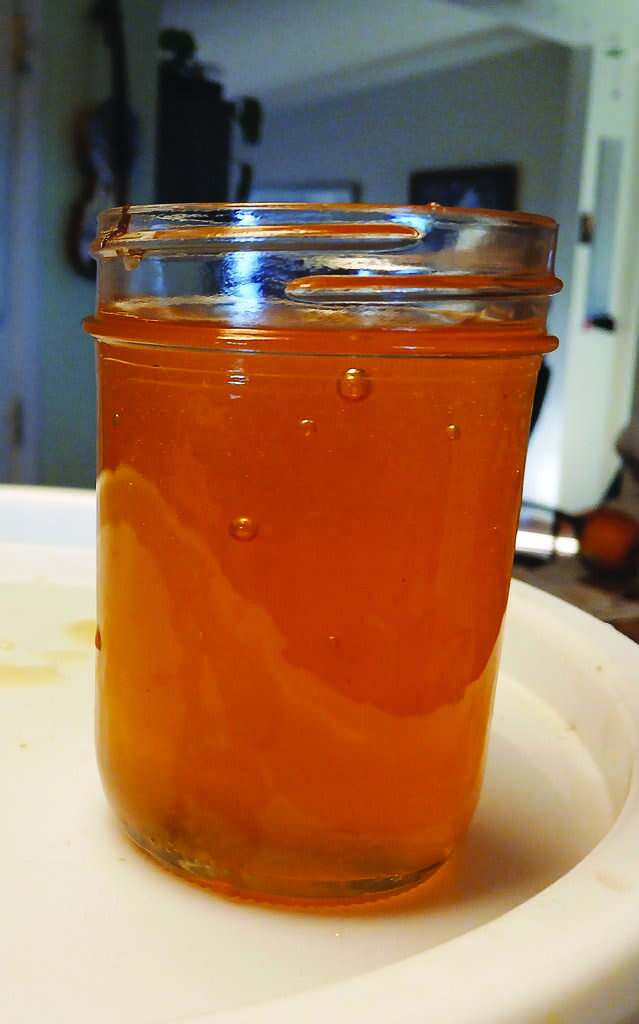
Speaking of bees, we had another good honey harvest thanks to the return this summer of the prairie coreopsis, said to be a favorite of bees for their nectar and pollen. Last year, we harvested 7 or so gallons of honey; this year was about 5, still an amazing amount. The honey is darker than last year’s and “less citrusy and sunny,” Margaret says, but still good.
One summer mystery still to be answered: How many pumpkins will our front yard pumpkin patch yield? As of this writing, we haven’t harvested yet, but more and more pumpkins are popping up among the thinning leaves. Our yield last year was a whopping 32 pumpkins of varying sizes. Not sure we’ll reach that number this year — we may have actually overplanted and crowded some out — but that’s yet to be seen. We also grew some quite substantial cucumbers in that part of the garden. And a decent kale crop in our side yard garden; I’m not a fan of kale, but our rabbits certainly are. We also planted some new flower beds this summer, another treat for the bees. They thanked us, of course, with that plentiful honey.
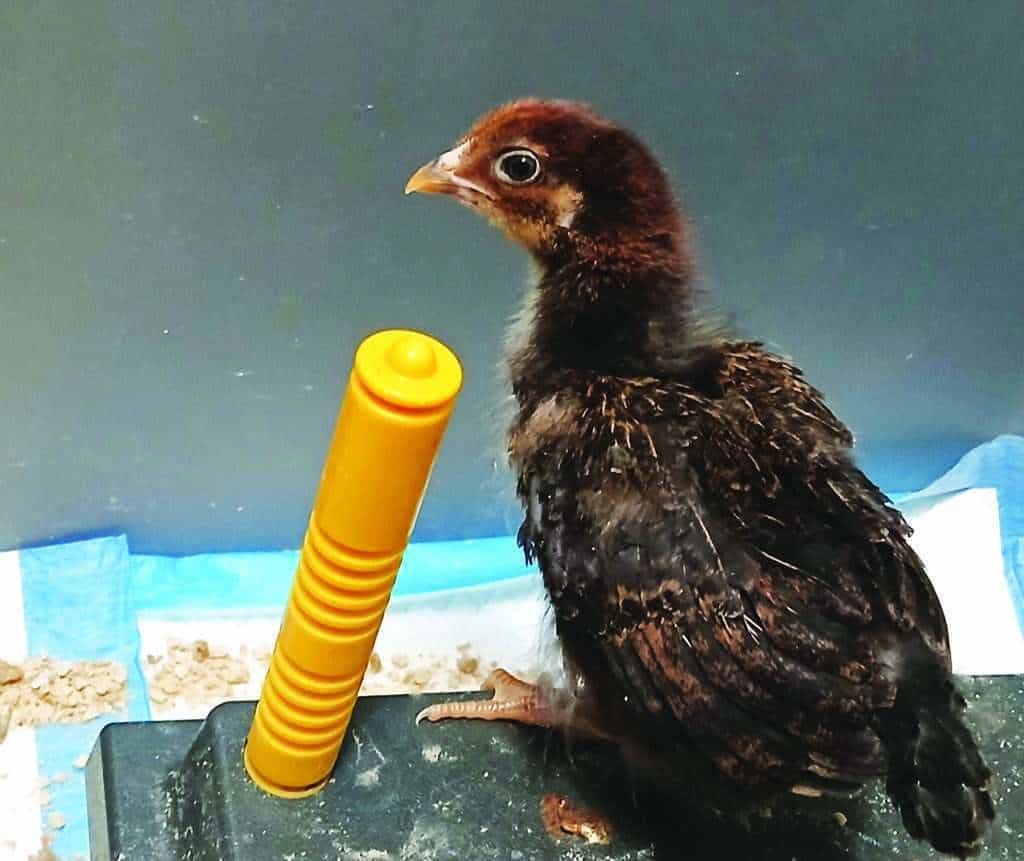
This little one is a surprise addition to the Radford flock.
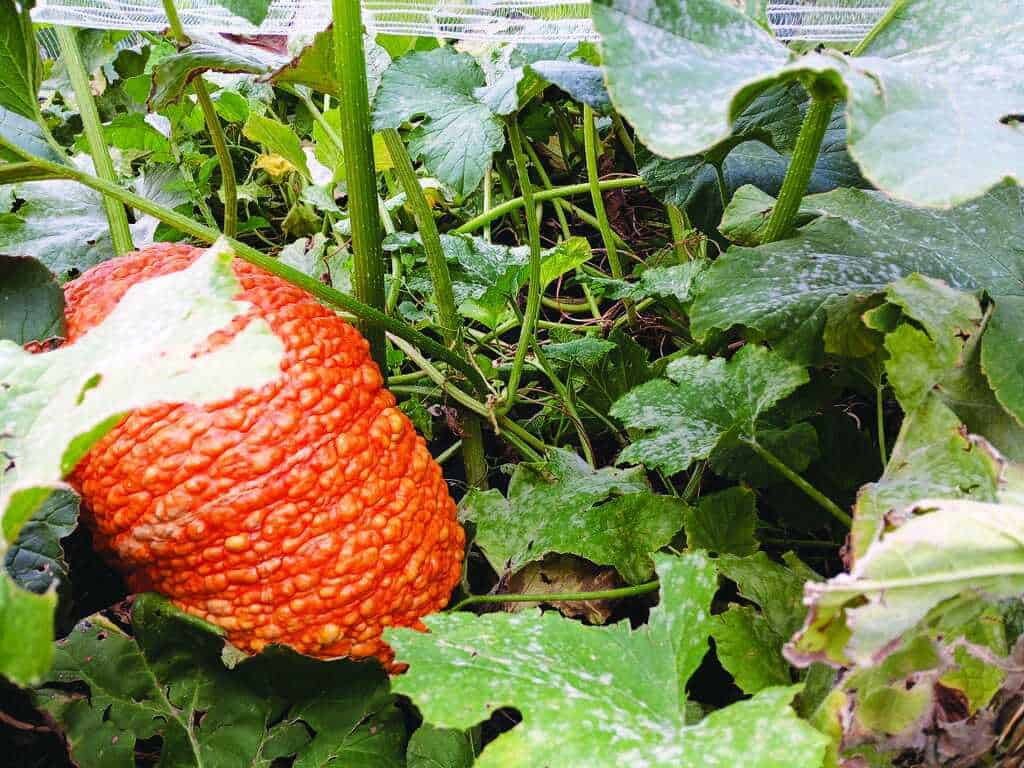
This is one of presumably dozens of pumpkins in the Radford pumpkin patch.