By Jon Huang
During the winter of 2020, in the early stages of the COVID-19 pandemic, the Black Forest Community Club sent out a social media post asking residents what they wanted to see happening in the Forest.
Theda Stone proposed a farmers market.
Stone said she had grown up in Maine around a robust farmers market community before moving to Colorado to raise her family. She had previously worked at USAA as a sales manager for many years before leaving to be a stay-at-home mom for her sons.
The Black Forest Community Club responded to Stone’s proposal by starting a farmers market hosted by the club on their property. Three years later, Stone approached Black Forest Community Church about hosting the farmers market. The church was in a transitional period. With dwindling membership, rising building costs and upkeep, they were looking for ways to survive while continuing to support their community. She also approached the market about changing their location; and, at the same time, became the co-manager of the Black Forest Farmers Market.
“Farmers markets were considered an essential service so we were able to stay open during COVID,” Stone said.
The farmers market on church grounds
According to a document from the nominations for acceptance as a historic property, the Black Forest church started in 1932 with a group of 10 families. Thanks to donated land from two families and several others who donated logs and labor, the Old Log Church was completed in 1940 and served as a primary residence not only for the church but also for a variety of religious and civic groups in need of a meeting place. After the stone sanctuary building was built in 1962, the Old Log Church was used as an office space.
As the farmers market grew, church members were introduced to a new community that collectively contributed to the church in their own way.
The Black Forest Community Church ministry coordinator, Lesley Sheley, said the growing interactions with vendors brought new life to the grounds (of the church). They (vendors) helped with maintenance and planted new flowers.
BFCC ministry coordinator Lesley Sheley fondly recalled the church transition. She said the growing interactions with vendors brought new life to the grounds. They helped with maintenance and planted new flowers, she said.
“We had a clean-up day this spring and several of her vendors came and helped clean up,” Sheley said. “They take care of the land. They take care of each other. They do not leave garbage laying around there … we appreciate that. They honor the land that we are on.”
Today, the farmers market hosts more than 70 vendors.
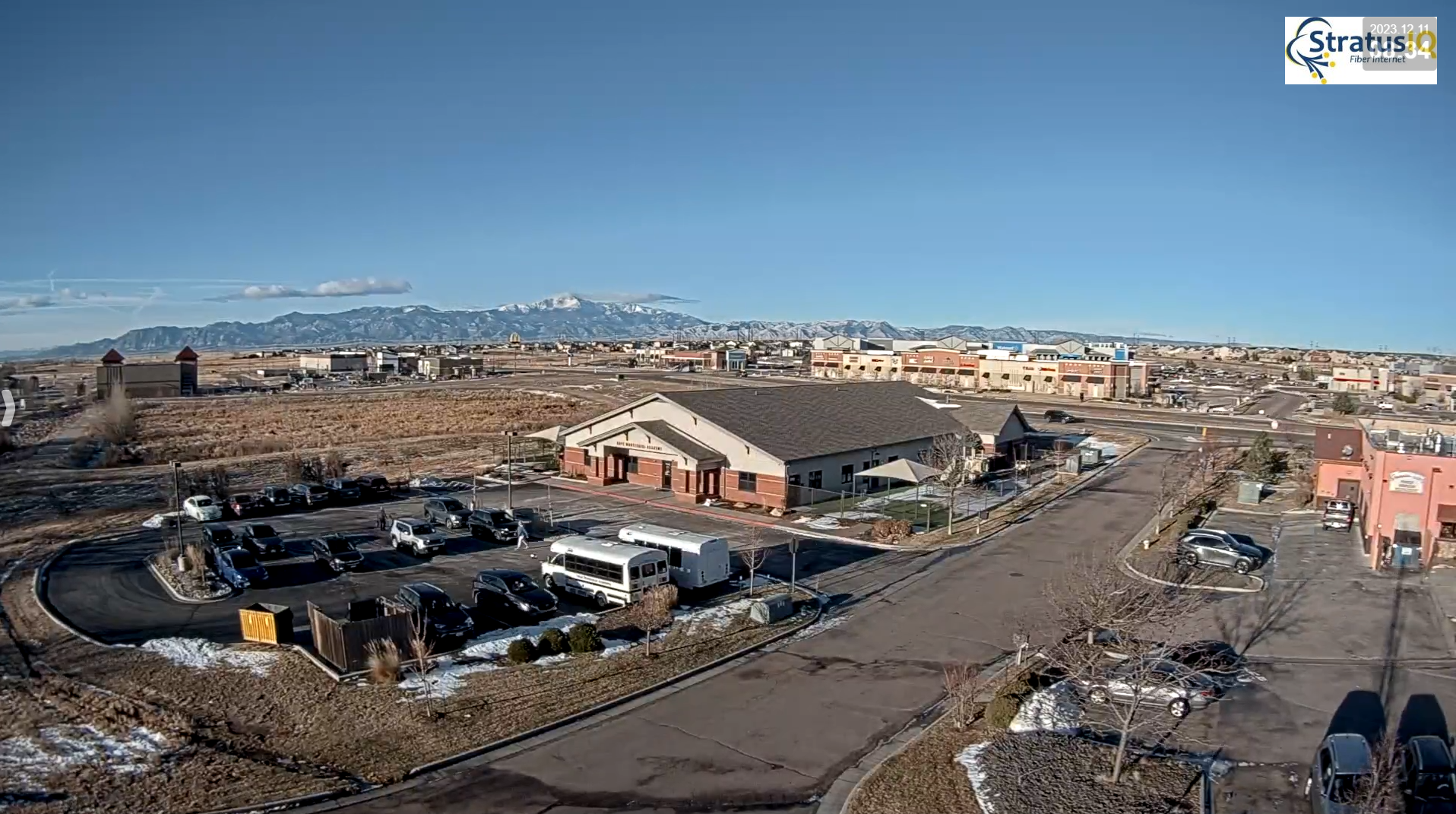
Besides their work with Stone, BFCC also started renting out another one of their buildings to a Montessori school. BFCC treasurer Cindy Halsey said not only did welcoming outside members of the community expose repair needs on their property, it also was a blessing.
“Because we have this sort of community with these other groups, we had some money to actually fix some of the things, too,” Sheley said.
As for the Old Log Church building, it had remained empty since the pandemic.
Stone approached church leaders with another proposal that they ultimately accepted.
A local market is born
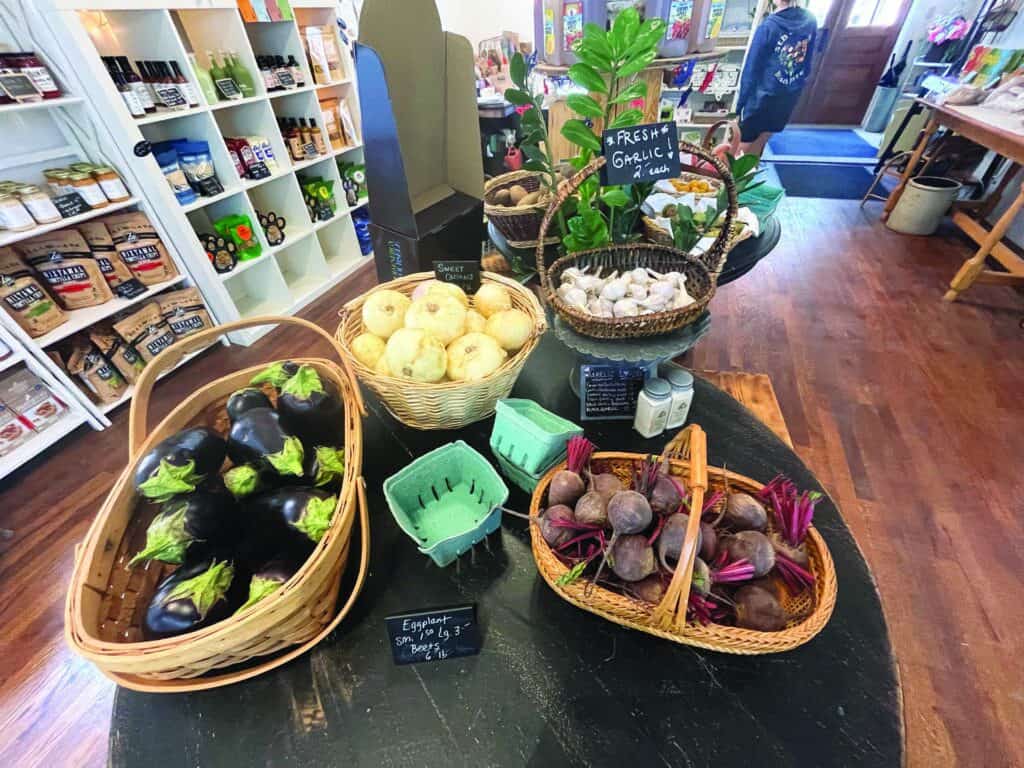
In November 2024, the Old Log Church became the home of the Farm Shop, a year-round market selling locally raised produce, meat and other prepared foods. In the year prior to opening, Stone did extensive internal renovations to the historic building, even making a new parking lot. In exchange, the church has worked with her on rent and jumped through countless bureaucratic red tape to get the property rezoned.
The Farm Shop sources its produce from local farms like Emerge Aquaponics in Black Forest, Further Up Farms in Elbert County and two regional food aggregators — Mountain Freshies, a group of farms in the North Fork Valley, and the San Luis Valley-based Valley Roots Food Hub, which works with farmers across the state. She also has sold produce from neighbors’ home gardens — and welcomes donations.
All produce at the Farm Shop is either certified organic or naturally grown without synthetic pesticides or herbicides. Stone said some of the small farms that grow organically forgo certification because of the expense.
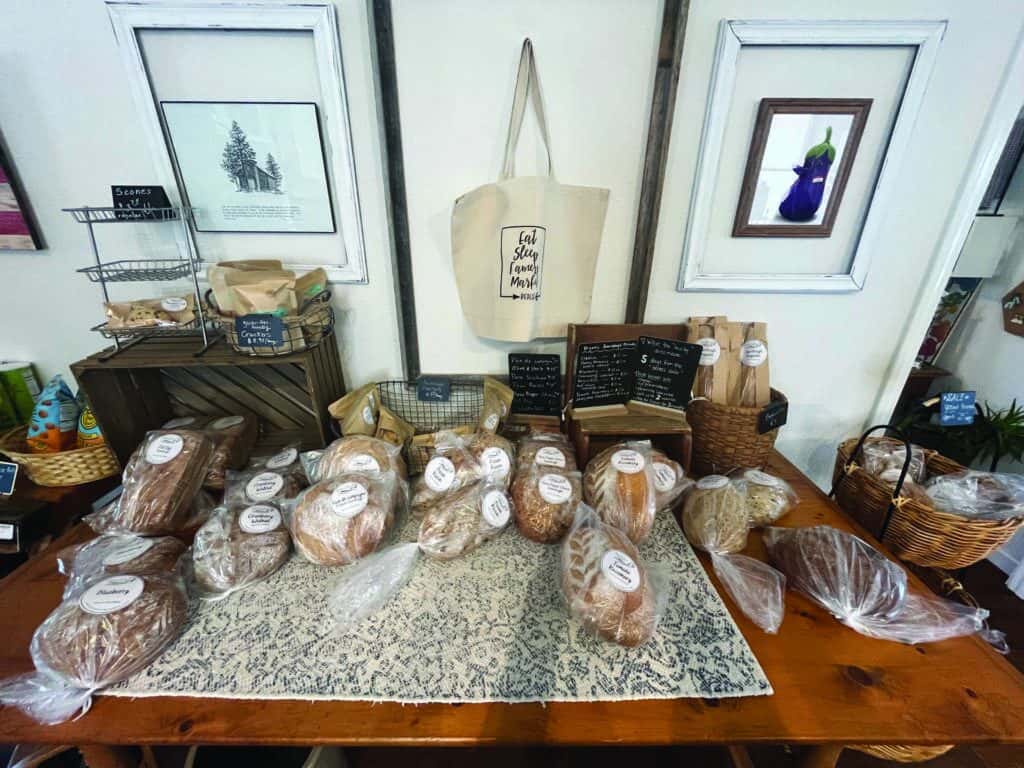
As far as meat, she currently sells beef and water buffalo from SG Cattle Co. and sausage from Gosar Ranch Natural Foods in the San Luis Valley. She carries bread from the Colorado Springs-based Nature’s Start Bread Co., which specializes in naturally leavened sourdough breads. She takes customer requests for items not normally stocked, and encourages any local vendors to reach out to her as well.
In addition to food, the shop carries arts and crafts made by several local artists, including cards and clothing.
The personal connection of running a small shop is important to Stone.
“I’ve had (customers) who have commented that this reminds them of those little grocery stores in the small towns in Europe,” she said. “I wanted to feel like it’s this cozy shopping experience that people can have and take their time to kind of wander around and look at things.”
Theda Stone
“I’ve had (customers) who have commented that this reminds them of those little grocery stores in the small towns in Europe,” she said. “I wanted to feel like it’s this cozy shopping experience that people can have and take their time to kind of wander around and look at things.”
Sometimes this translates into helping customers with food intolerances find out how specific products were made.
“I can immediately reach out to that distributor and find out that information while they’re shopping around most of the time. That’s something you don’t feel comfortable doing in a bigger store,” she said.
The Farm Shop also sells homemade granola, salsas and vinegars. Stone said she likes giving local producers an opportunity to sell their products year-round to their community, many of whom Stone got to know through the farmers market.
The story behind the food
Stone’s interest in nutrition was influenced by having to transition to a gluten-free diet to address her son’s Celiac disease. She has also met an increasing number of people who inquire about how foods are grown and processed. She said she takes pride in being able to sell food she would personally eat and supporting the community. The shop is limited to the variety of items she can carry. Not only is space constrained, but minimum order quotas from larger wholesale distributors would prevent her from supporting local producers the way she is now.
Another issue is locally grown produce can be more expensive than produce in big box stores. For Stone and many local food supporters, she said these sacrifices allow fair compensation for small farms working on thin margins in unpredictable conditions. Furthermore, supporting good agricultural practices to produce food, grown in season and freshly picked, all increase the overall nutrient density of the produce itself.
The Farm Shop accepts the SNAPS (the state’s Supplemental Nutrition Assistance Program) and is enrolled in the state’s new Produce Bonus initiative, a federally funded incentive program that allows SNAP members to get up to an additional $60 a month when they buy fresh fruits and vegetables, dried beans or frozen fruits and vegetables without added salt, sugar or fat.
Stone said part of the value of good local food is the community and processes involved in its production.
“A lot of people like to tell a story, whether it’s sitting across a table breaking bread with someone or giving a gift and saying this is where this is from and how it’s made,” she said.
In a way, this narrative is a part of the gift itself.
Stone’s community mindedness with the farmers market and now the Farm Shop hasn’t been lost on church members.
“She has been a wonderful partner and she’s probably been a more wonderful partner than we have been,” Sheley said.