By Jon Huang
In June of this year, Katie Miller started accepting other people’s trash —literally. Miller, a rancher who runs Heritage Belle Farm, began hosting a composting site on her property.
Composting is a process by which organic material is broken down into beneficial nutrients that the soil can use for plant growth. This not only increases the soil’s nutrients and water retention, it also leads to healthier plants, more drought-resilient ecosystems and reduces buildup in landfills.
Miller has partnered with the El Paso County Conservation District for its Farm Waste to Farm Soil program, an initiative sponsored through the Colorado State Conservation Board to increase composting efforts throughout the county. Part of this is collaborating with local farmers to improve the soil quality on their land through composting.
“We’re really trying to kind of engage the community and utilize resources that are otherwise set to go to the landfill,” Miller said. Their goal is to prevent food waste and agricultural waste from ending up in the landfill. “We are trying to add those to our compost piles and keep a more closed system,” she said.
On the farm, Belle’s Farms uses a composting system called an ASP (aerated static pile), which uses perforated PVC piping to blow oxygen through the piping into the pile for 30 seconds, every 30 minutes. This provides the necessary conditions for the piles to break down more quickly and allow beneficial microbes to break down organic matter. Normally, non-aerated or “static” compost piles take 10 months to a year to fully break down; whereas, ASPs take as little as two months.
The food scraps come from Food to Power’s community composting program, which collects from local grocery stores, restaurants and residential customers. Food to Power is a nonprofit food advocacy organization based in the Colorado Springs’ Hillside neighborhood that runs zero-cost food rescue programs in underserved areas of the city. It also provides urban farming education and volunteer opportunities for the local community.
Miller mixes in her own cows’ manure and mulch to form the final piles. Each pile is placed on top of the pipe system, including more processed compost on the top. There might be a slight smell the first few days but because of the increased oxygenation, this disappears quickly, she said. The piles are kept around 5-6-feet tall to allow more thorough aeration and extend around 12-14-feet wide.
Once fully decomposed, Miller will take half for farm use and the other half will go to Food to Power to redistribute to their residential customers in the community.
Successful composting requires favorable conditions to allow beneficial microorganisms, including bacteria, protozoa and fungus to decompose the organic material. These organisms are responsible for generating large amounts of heat. Miller said one generally wants piles to get around 135 to 140 degrees Fahrenheit. However, over the summer, Miller’s piles reached 165 degrees. At higher temperatures like this, the risk of spontaneous combustion increases. Finding the right balance of materials and moisture has been an ongoing process.
As far as critter control, Miller hasn’t had any major issues. “My biggest issues are my pet dogs that like to run out there and see what they can find. After we’ve made a pile … the mice won’t live in it because it’s too hot,” she said.
The program plans to replicate this model at other farms in the future.
Another part of Farm Waste to Farm Soil is establishing drop-off sites in more populated urban communities to reduce waste. Currently, the program has two drop-off sites with bear-proof stations at St. Michael’s Episcopal Church on the northwest side of Colorado Springs and Deerfield Hills Community Center on the southeast side of the city.
Zach Brown is a manager at Food to Power’s city composting program. Brown said the program brings in about 10,000 pounds of food waste a week. They currently have around 700 members.
“The ultimate goal was to bring both compost collection and compost processing to regions of El Paso County that are underserved in terms of composting,” Brown said.
Mariah Hudson, the EPCCD district manager, said she hopes the initiative brings together urban and rural communities to support sustainable agriculture and local food systems.
“We want to support local farms and ranches by providing a valuable soil amendment, promote circular economy principles in agriculture and strengthen connections between urban food waste generators and rural food producers,” Hudson said.
By encouraging greater community participation in redirecting food waste from landfills to productive use, Food Waste to Farm Soil hopes to turn a disposal problem into a valuable resource for local agriculture and community gardens while promoting a culture of waste reduction and resource efficiency.
By encouraging greater community participation in redirecting food waste from landfills to productive use, Food Waste to Farm Soil hopes to turn a disposal problem into a valuable resource for local agriculture and community gardens while promoting a culture of waste reduction and resource efficiency, she said.
The program is currently seeking community input on future drop-off and composting locations; they are also open to partnering with churches or other civic organizations interested in supporting more sustainable community waste practices.
For additional information on the Food Waste to Farm Soil Program, visit https://epccd.org/grant-food-waste-to-farm-soil
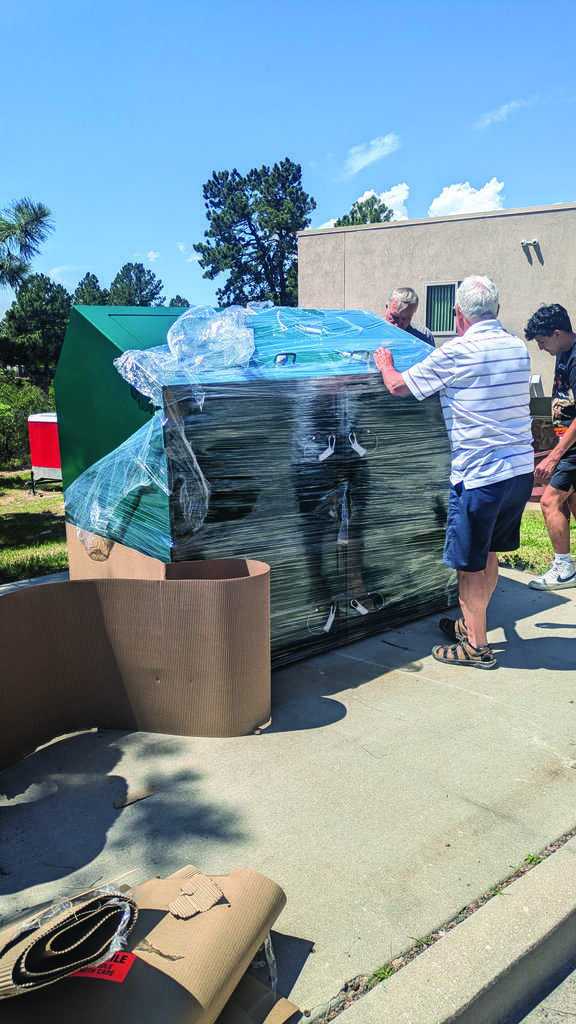
Farm Waste to Farm Soil has two waste drop-off sites with bear-proof containers at St. Michael’s Episcopal Church in Colorado Springs.
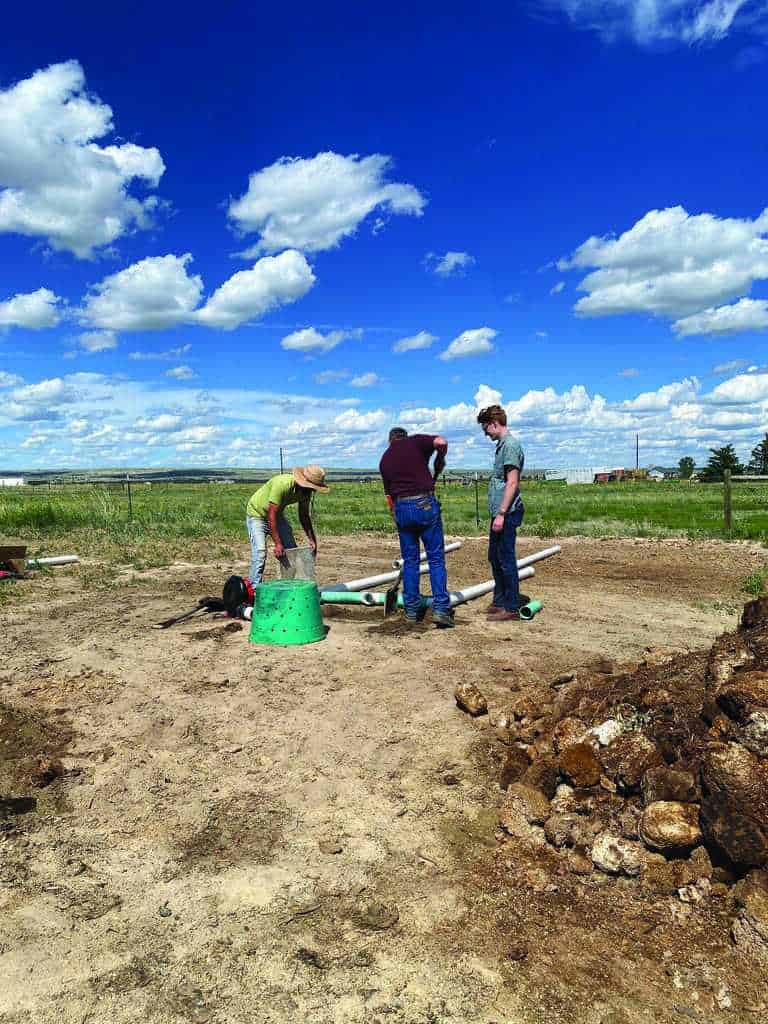
Perforated PVC piping is being laid at Belle’s Farms for a composting system called aerated static pile. Oxygen is blown through the piping into the pile for 30 seconds, every 30 minutes.
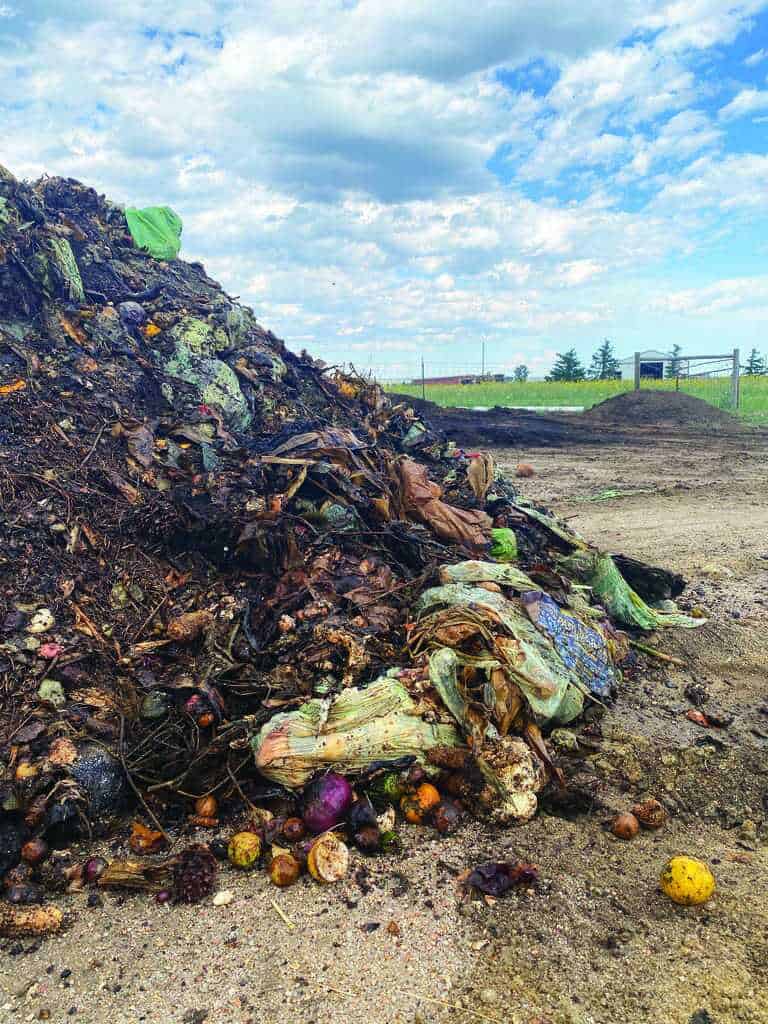
Composting will eventually break down this organic material into nutrients that create a rich soil for plant growth. The process prevents food waste and agricultural waste from ending up in the landfill.