The Falcon Fire Protection District held its monthly board meeting May 20 at the Falcon Fire Administration Building, 7030 Old Meridian Road. Attending were Joan Fritsche, attorney; Tom Kerby, vice president; Ray Hawkins, treasurer; James Reid, president; Dan Kupferer, assistant secretary; Steve Podoll, secretary; and Trent Harwig, chief.
April minutes
The board unanimously approved the April minutes.
Promotion
Chief Harwig promoted Firefighter Cale Lohman, an eight-year veteran, to lieutenant.
Colorado Wildfire Resiliency Code updates
Harwig invited Aaron Johnson and Ken McDonald, Wildland-Urban Interface Professional Development Educators with the Division of Fire Prevention and Control, to answer the board’s questions regarding the CWRC (Colorado Wildfire Resiliency Code). Harwig also said there was a 30-to-60-day delay for state evaluations, which would come at a cost to builders. He said the county, which will approve the code, will have builders sign affidavits stating they will build according to the code.
Johnson explained to the board how the fire-intensity map was created, acknowledging limitations in the current map, which was developed using LiDAR technology, and the anticipated need for future revisions. The state is currently researching the impact on insurance costs. Preliminary evaluations, based on studies from California, suggested that implementation of the code would increase longevity and decrease maintenance in the long term, while potentially resulting in a 2% to 3% increase in premiums in the short term.
The board collectively expressed disapproval over how the code was implemented and concerns about downstream costs to the community. Reid specifically told Johnson he did not agree with approving the code until the map was corrected because of the potential additional expense to homebuyers and homeowners in the meantime.
Johnson said there were two ways to address inaccuracies in the current map under the existing code: 1) submit a revised district map to the state; and 2) if a parcel was inaccurately classified at the time of building, the local official in charge — in the district’s case, the fire department — could change the classification on an individual basis without consulting the state. He encouraged the board to attend future meetings about the code, which allow remote attendance.
Johnson also said the new code applies only to new homes, additions to existing homes greater than 500 square feet and alterations affecting more than 25% of a roof or siding. Ground truthing — the process of verifying remote or theoretical data with direct, on-site observations — could be completed during the planning stage of construction.
If the district did not adopt the code, Johnson explained it would be placed on a list accessible to insurance companies and other entities; however, insurance companies could not use the CWRC map to assess risk or set rates.
Johnson said current research shows mitigated structures have a 45% to 65% increase in fire resiliency. He explained that the leading cause of a fire spreading is embers from an existing fire, which can travel up to 3 miles from the point of origin. He referenced case studies in which structural hardening and fire mitigation made a difference. Kupferer said he believed fire mitigation was more effective than structural hardening alone. Johnson explained that current studies and the code treat both mitigation and hardening together as protective measures.
The board agreed to proceed with the current plan to make map revisions and petition the state for changes before adopting the code.
Treasurer’s report
Harwig presented financial figures through April 2026, representing 33.3% of the fiscal year. The general fund was at 44% of budgeted revenues. There was a 3% drop in specific ownership tax compared to the same time last year. Total expenses were not presented because of a clerical error.
The ambulance transport fund was at 26% of expected revenues, and total expenses were also at 26% of expected. The capital project fund had received 25% of expected revenues. Total expenses were not reported because of a clerical error. The rural water fund had no new activity.
The board unanimously approved the report.
Staff reports
Chief Joe Cosgrove presented the March 2026 operations report. There were 400 calls during the month.
Chief Jon Webb presented the EMS report. In April, there were 133 transports and an average cash per trip of $734.39. The year-to-date average was $659.42 per trip. The 24-month totals showed 3,461 transports with an average cash per trip of $665.91. The Medicaid supplement increased that figure to $825.20.
Lt. Curtis Kauffman was absent, so no fire prevention report was given.
Training center site
Kerby recommended requesting Kari Parsons as the county planner for the site development plan. Harwig said he received a bid from YOW Architects for the maintenance building project, with plans to use the company for the training center project as well. The board plans to use land development consultants for the site development plan.
The decisions do not require a formal bidding process because the project costs fall below the threshold amount. The board also discussed advertising for bids for the building itself. Harwig anticipates the training center project will be carried out over several years so the district can pay for the project using existing funds.
FFPD
719-495-4050
7030 Old Meridian Road
falconfire@falconfirepd.org
New training center for FFPD
By Robin Widmar
Firefighters train continually to maintain current proficiency, expand their knowledge base and learn new skills. Now, Falcon firefighters are moving forward with a dedicated training center to provide a wider variety of training opportunities closer to home.
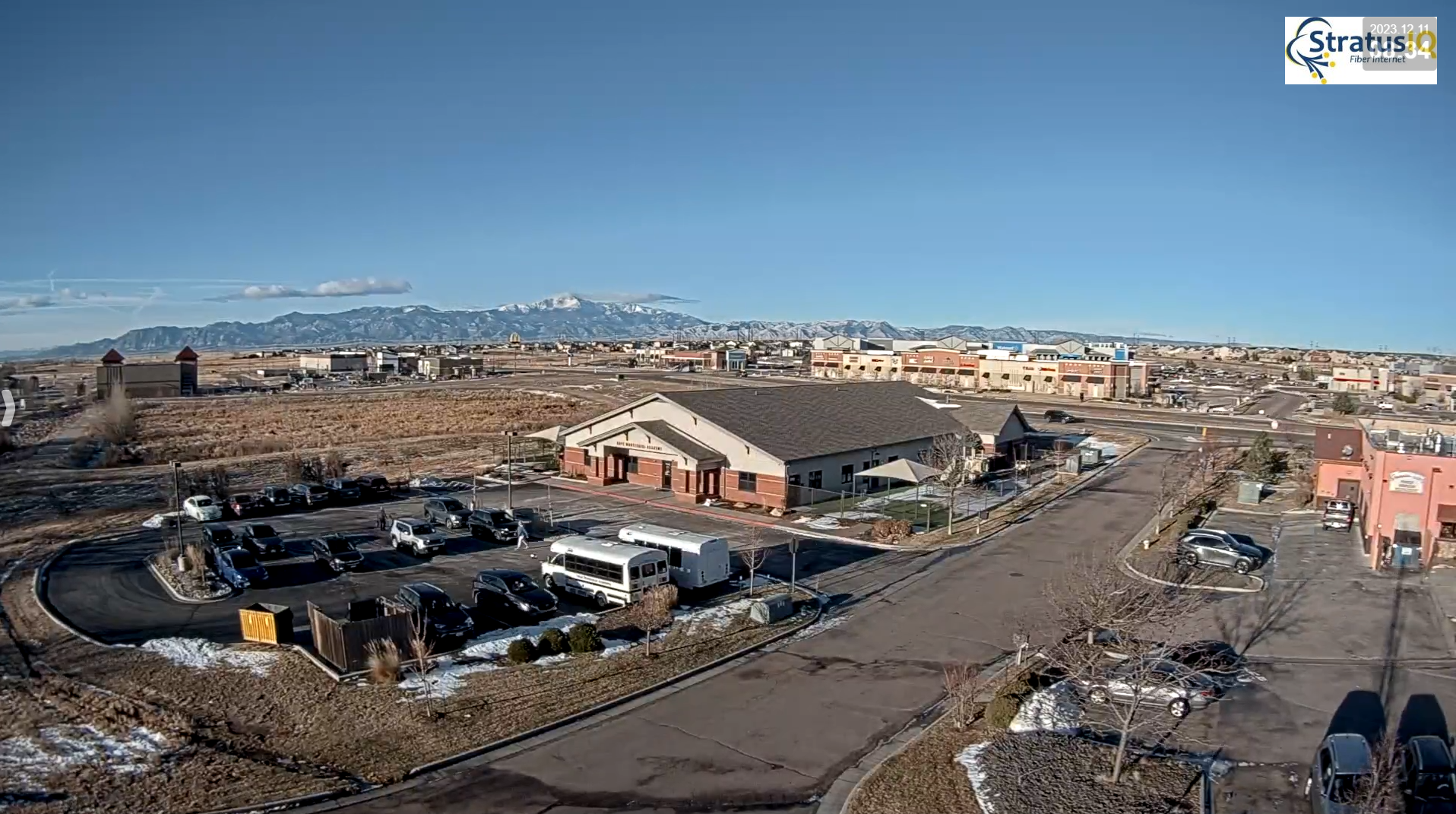
In April, the Falcon Fire Protection District closed on the purchase of about 3.5 acres behind the new Circle K on U.S. Highway 24 at Meridian Road. Falcon Fire Protection District Chief Trent Harwig said development of the fire training center will be done in phases over at least three years, with an initial goal of finishing the project in late 2028. One reason for the extended timeline is that the fire district will fund it with existing revenue. “There is no lease purchase or loan on it,” Harwig said.
He said this year will include the land purchase, development plan review and approvals, and “maybe some minor site work as far as curb and gutter, sidewalks and fencing.” Future plans include a training tower, a building to house classrooms and offices, a storage building for specialty equipment and a cistern that can be used to practice drafting water and conduct pump tests on the fire engines.
The district is currently reviewing designs for the training tower. Harwig said officials are considering a three-story modular system that he described as an “all-inclusive” building with multiple training props, including live burn capability, roll-up doors to practice breaching techniques, a pitched roof to train on roof operations and more. In this type of construction, a contractor brings in the prefabricated modules and installs them on the prepared lot. Harwig said the classroom building will be similar to the current administrative building, with a larger conference and training room, offices, smaller breakout classrooms and a bay to accommodate a fire engine.
The fire training center has become a necessity because few such facilities are available in the county. Harwig said training facilities at the Colorado Springs Fire Department and at military bases have limited or no availability for outside fire agencies. Additionally, those facilities are located at a distance from the Falcon fire district. Having a dedicated training center keeps Falcon firefighters in the district to quickly respond to emergencies. While the center is primarily intended for Falcon firefighters, Harwig said the district is planning to make it available to neighboring fire departments. “We need to train, they need to train and we need to train with them,” he said.
The FFPD Board of Directors supports the training center project, Harwig said. “The board is committed,” he said. “This is a priority for them, and they are committed to getting it done.”