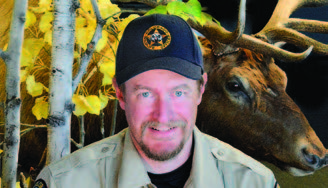
Editor’s Note: This is the final Colorado Parks and Wildlife article scheduled for The New Falcon Herald. In the weeks ahead, Aaron, a career wildlife officer, will begin meeting directly with community groups to discuss wildlife issues in person. While this is the last scheduled article, there may be guest articles from CPW in the months ahead on special topics. If you would like to schedule Aaron to speak at your community meeting, please email aaron.berscheid@state.co.us or call (719)227-5231.
What does CPW actually do? Part 2
By Aaron Berscheid
District Wildlife Manager, CPW
In my previous article, I discussed a study conducted by the National Association of Conservation Law Enforcement Chiefs, the National Conservation Law Enforcement Education Foundation, Responsive Management and the University of Wisconsin.
The study polled both conservation law enforcement agencies (like Colorado Parks and Wildlife) and the general public to determine common awareness of conservation agencies’ roles and the most common outdoor recreational activities people participate in. The study highlighted many challenges and perspectives new to those working in conservation law enforcement. There is a lack of awareness of the roles performed by conservation management agencies like CPW, and that places future funding for CPW and similar agencies at risk.
With our country’s founding, wildlife and their habitats were viewed as commodities that could be exploited for personal financial gain. The intrinsic value of wildlife was not really considered. Wildlife was plentiful, and Americans had just liberated themselves from a style of conservation in which wildlife was owned by the king. America was seen as a land of opportunity that belonged to the people; wildlife was seen as another way to make a living.
Market hunters worked to maintain a food supply for the general public and often devised innovative ways to harvest increasing amounts of wildlife. Over the years, it became apparent that a change in thinking was needed. Bold ideas from people like Aldo Leopold and Theodore Roosevelt started the conservation conversation. These conversations eventually turned into the “North American Model of Conservation.”
All of these ideas are widely documented, and if you are curious about specifics, please contact me with questions. Broadly, the North American Model of Conservation is the acceptance that wildlife and their habitats have intrinsic value and belong to everyone, not just landowners, governors or presidents. Wildlife is a public trust, and conservation agencies were created to protect this public trust to ensure the proliferation of wildlife for future generations.
Colorado Parks and Wildlife, like other state and federal conservation agencies, is funded through money generated from the sale of hunting and fishing licenses and equipment. This idea was novel and effective at its inception because those who used the resource (hunters and anglers) were the primary funding sources for its proliferation and use.
Historically, hunting and fishing were critical and traditional skills passed from one generation to another. In modern times, they have become popular hobbies and leisure activities, and less of a necessity, which has slowly phased out of and skipped generations. At present, perspectives toward and participation in hunting and fishing have changed. Considerations for conservation are not largely part of the conversation.
The study I described in my opening paragraph highlighted this negative trend and launched a crucial national conversation likely to challenge conservation agency relevance, funding sources and historical attitudes toward conservation. If you would like to read the study yourself, it is linked here:
https://naclec.org/press-pages/conservation-law-enforcement-usa-national-report
I believe this study brings us to a new crossroads of conservation similar to the conversations and actions that created the North American Model of Conservation.
In the coming months, I look forward to discussing this topic and others, directly with community groups of all sizes. If you would like to schedule me to speak with your organization, please email me at aaron.berscheid@state.co.us or call me at 719-227-5231.