Coben Scott is a history graduate, a history buff, and he has explored and researched much of Falcon and the area’s past. Coben’s column, Yesteryear, features stories about the history of the plains.
Peyton’s outlaws
By Coben Scott
Colorado is synonymous with the Wild West and its extraordinary characters. Butch Cassidy and the Sundance Kid carved the western slopes and southern canyons for the Outlaw Trail, hitting every bank along the way. Robert Ford, who murdered Jesse James, was booted out of towns across the state before meeting his end in Creede. Wyatt Earp and Doc Holliday frequented saloons and gambling halls across Pueblo, Silverton and Glenwood Springs.
Countless bounty hunters and cowboys passed through the Pikes Peak region, along with a slew of wanted posters.
By the time towns like Falcon, Peyton and Calhan were established, the era of outlaws was declining. The rural West was becoming more tame, and organized crime in the developing cities was becoming more prevalent, especially once the Prohibition era began.
By the 1920s, the Fleagle Gang was one of the last outlaw gangs to stage Wild West-style offenses. They rigged gambling games, robbed banks and carried out numerous murders from Kansas to California. The gang primarily consisted of a rowdy pair — Jake and Ralph Fleagle. The gang was based out of Kansas, occupying a remote stash house filled with loot, weapons and their beloved getaway vehicles. One of their earliest crimes took place in the summer of 1920 at the Peyton State Bank. Jake and Ralph entered the bank in a “high-powered motor car,” wearing “large goggles,” according to the Kit Carson County Record. The two accosted the assistant cashier, Albert “Piep” Pieper, and the bank founder’s widow, Emma Herzberger, then locked them in the vault after looting the bank of $16,000 (over $250,000 today). According to The Telluride Journal, police and local posses searched three counties for the pair, but never tracked them down.
Eight years and many more robberies later, the Fleagle brothers planned what became their last major heist in Lamar, Colorado; the plan included kidnapping the bank president’s son in the process. The brothers recruited fellow criminals, George Abshier and Howard “Heavy” Royston, to assist with the robbery.
Upon entering the bank and shouting for everyone to put their hands in the air, the bank president grabbed his gun and began firing at the robbers, striking a bullet through Heavy’s cheek. The gang began to fire back, killing the president, his son and an employee. They stuffed as much as they could in their pillowcases, over $10,000 in cash, $12,000 in bonds and $200,000 in commercial papers (a combined worth of over $3 million today). They made their getaway after taking two tellers as hostages. On their escape route, they shot the sheriff’s vehicle off their trail and threw out one of the hostages. By the time they made it back to their safe house, they tricked a doctor into coming out to treat Heavy by saying a boy was injured in a tractor accident. At gunpoint, they had the doctor treat Heavy’s jaw and then drove out to a ravine, killing the doctor and pushing his car over the edge.
The gang took the remaining hostage to another location, killing him and then returned and split the loot before going their separate ways. Jake and Heavy went to different towns across California, Ralph to Illinois and Abshier settled in Grand Junction. They hadn’t gotten away quite yet though. A nationally known manhunt occurred, including the use of airplanes for an aerial view.
Not long after the robbery, the car and the body of the doctor were spotted. Upon examination, the sheriff found a distinct bloody fingerprint on the back window of the car. Having an educated hunch that this was connected to the Lamar robbery, the sheriff sent the print to the FBI. A year later, Jake was brought in as a suspect for a train robbery in California, although under an alias and not under arrest; still, he was fingerprinted, and the prints were sent to the FBI. The print expert had by memory recognized the right index print from a previous submission and began scanning through the records, matching it with the Kansas print.
Police arrived at the Fleagle homestead and noticed large sums of cash held by Jake and Ralph’s parents and siblings. The family claimed that the brothers sent them the money because they had gotten rich on the stock market, but eventually, a family member provided the address of Ralph’s post office box in Illinois, where he was arrested and questioned. Transported to the Colorado Springs jail, Ralph adamantly denied any connection to the Lamar robbery until the death penalty was mentioned. Once police told Ralph he could avoid being hanged by squealing on the others, he gave away the names and locations of Heavy and George, who were then arrested and brought to the Colorado Springs jail. The two admitted everything, except for Jake’s involvement and whereabouts; and, while prosecutors held their word of not requesting a death sentence, the jurors decided against that decision. In July 1930, the three men were hanged in Cañon City, and the hunt for Jake continued.
Meanwhile, on the border of Missouri and Arkansas, Jake was going under the alias Walter Cook and was working as a chicken rancher. After the capture and confessions of notorious Ozark’s bandit, Harry Lee Watson, and some postal clues, the law was honing in on Jake’s location. In October 1930, lawmen from across the country ambushed Jake Fleagle while he was riding a train to Branson, Missouri. When the law attempted to arrest Jake, he pulled his .45 to fight his way out, before receiving a .38 to the stomach, resulting in his death. While dying, he was fingerprinted once more; and, following his death, his prints matched the prints on the doctor’s vehicle. This case marked the first time that a single fingerprint was used to secure a criminal conviction for the FBI. The Big Timbers Museum in Lamar is in possession of several key items from the Fleagle gang and the 1928 bank robbery.
While the Fleagle gang faced their deaths in 1930, the president of Peyton’s new Farmers State Bank, Albert “Piep” Pieper, experienced yet another robbery attempt. This time, however, Pieper put up a fight, pulling out his .38 Special and firing two shots. The first bullet missed, and the second grazed one of the robbers. The couple escaped, but were eventually caught in Arizona. A key witness to this attempted robbery was Clarence Cleese of the Cleese family that owned the land that eventually became Homestead Ranch Park.
Today, the Pieper family still owns Farmers State Bank, and thankfully has not seen robberies the likes of the Fleagles for a long time.
Pull quote: By the time towns like Falcon, Peyton and Calhan were established, the era of outlaws was declining. The rural West was becoming more tame, and organized crime in the developing cities was becoming more popular, especially once the prohibition era began.
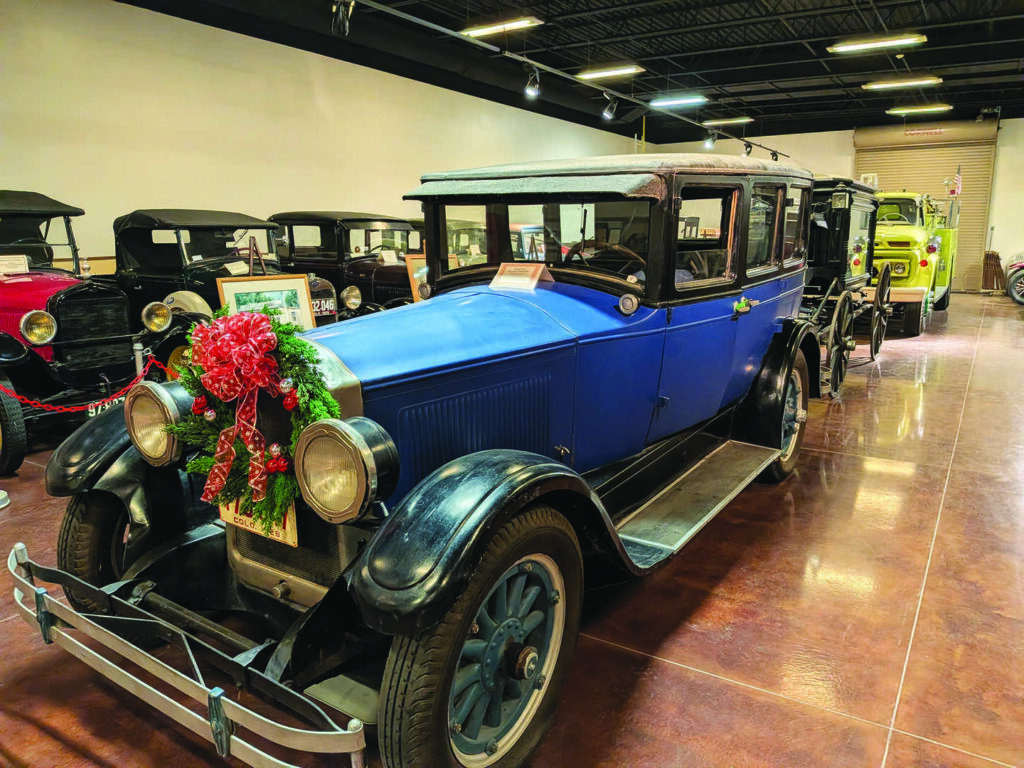
The Fleagles 1927 Buick was identical to their getaway vehicle from the Lamar Bank robbery.
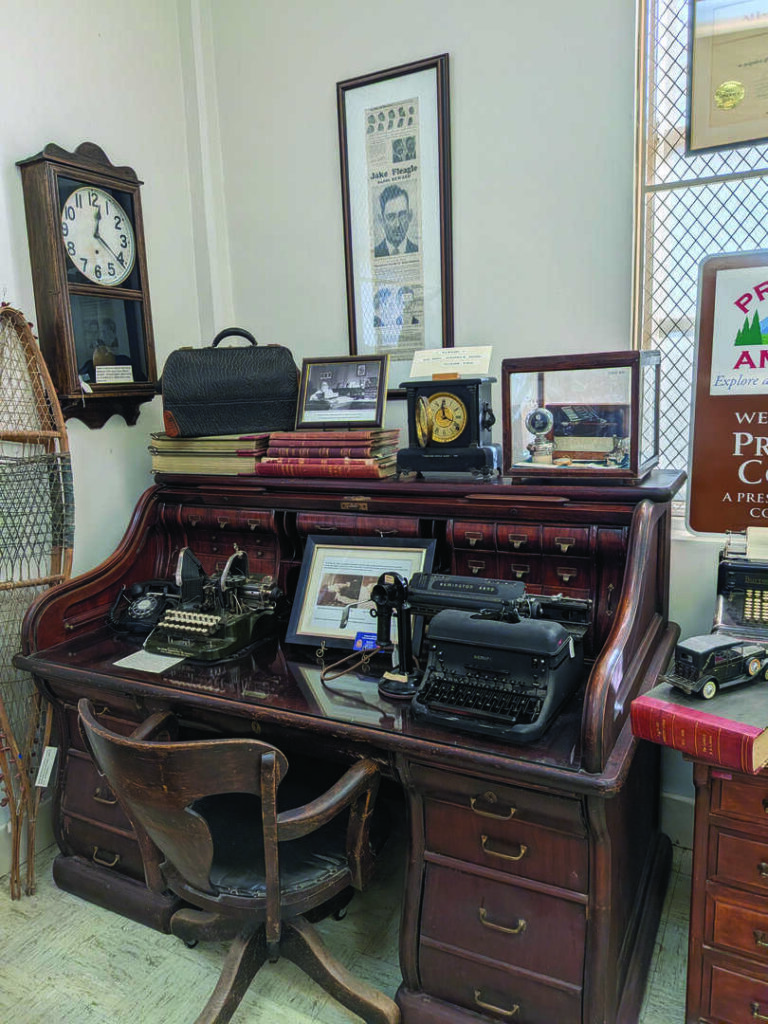
This is the bank desk with items from the Lamar Bank; Jake Fleagle’s mug shot is framed on the wall.
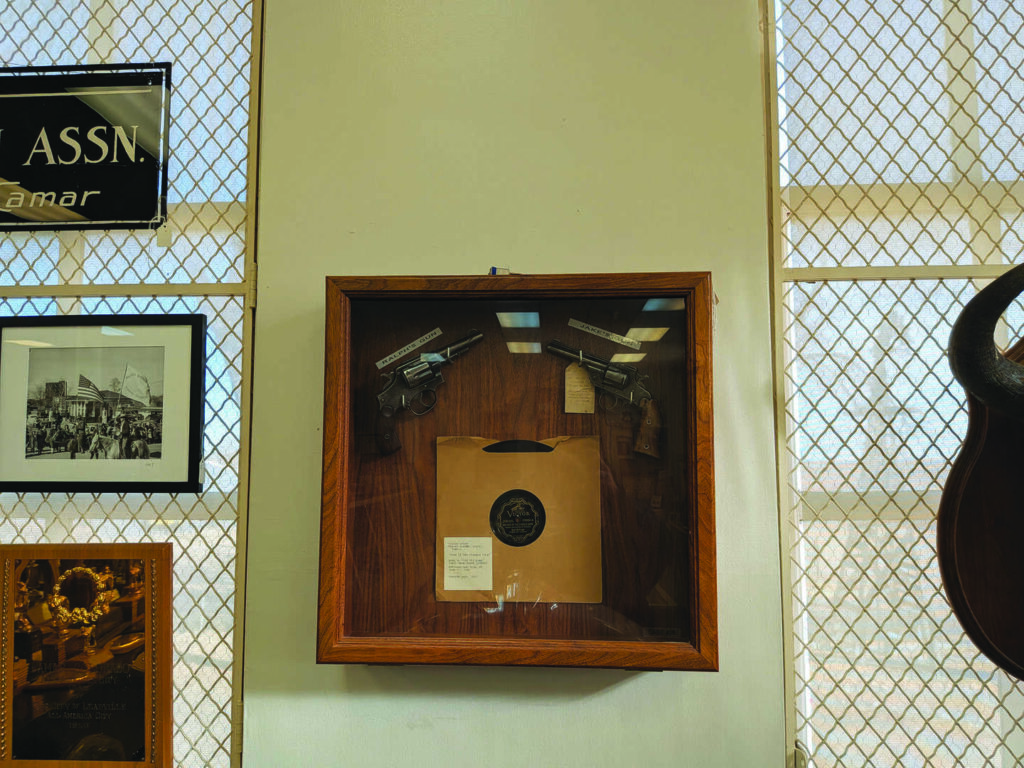
Jake and Ralph’s guns are shown along with a record of a song titled, “The Fate of the Fleagle Gang,” from 1931.